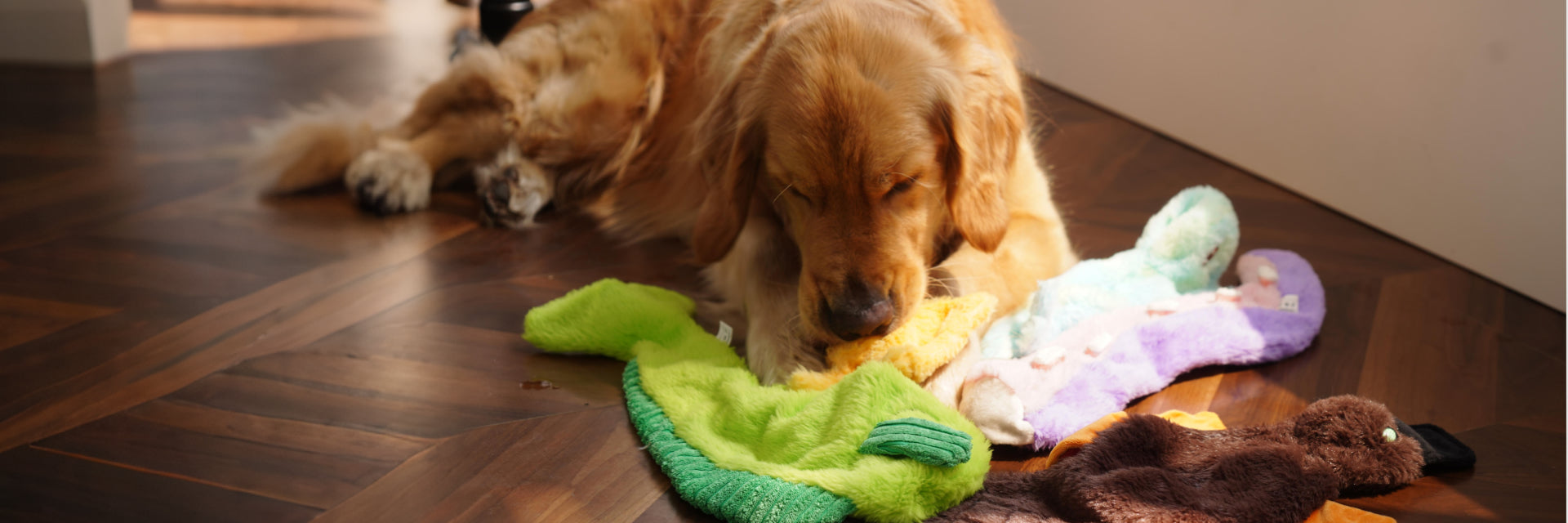
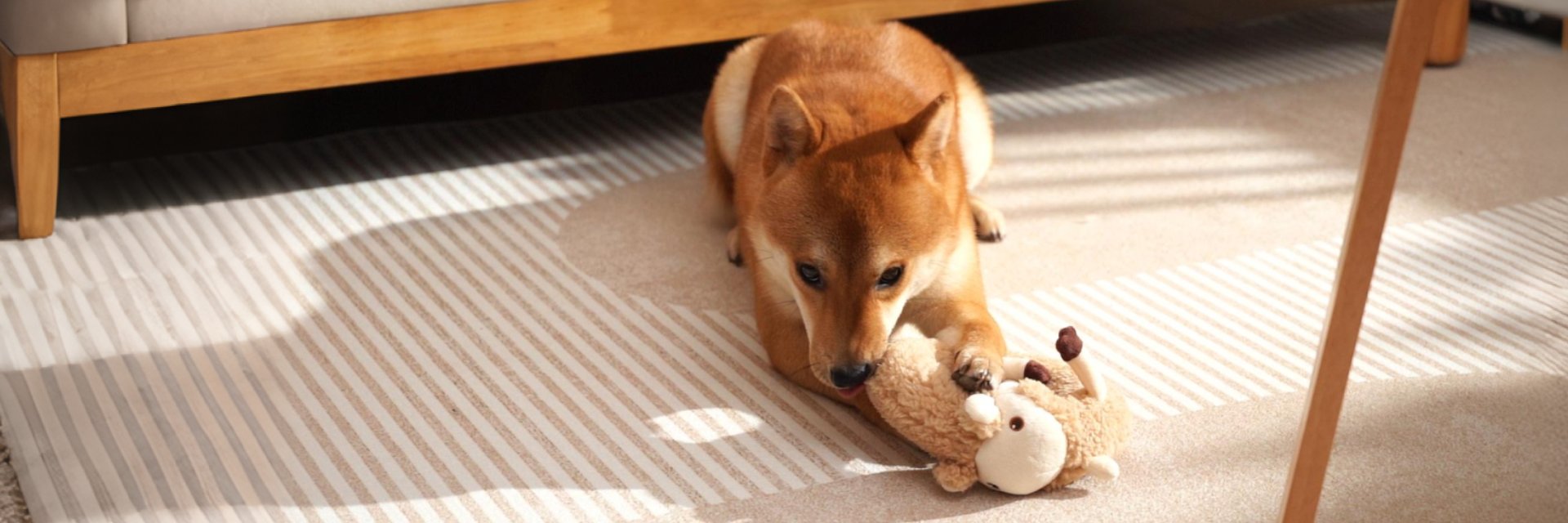
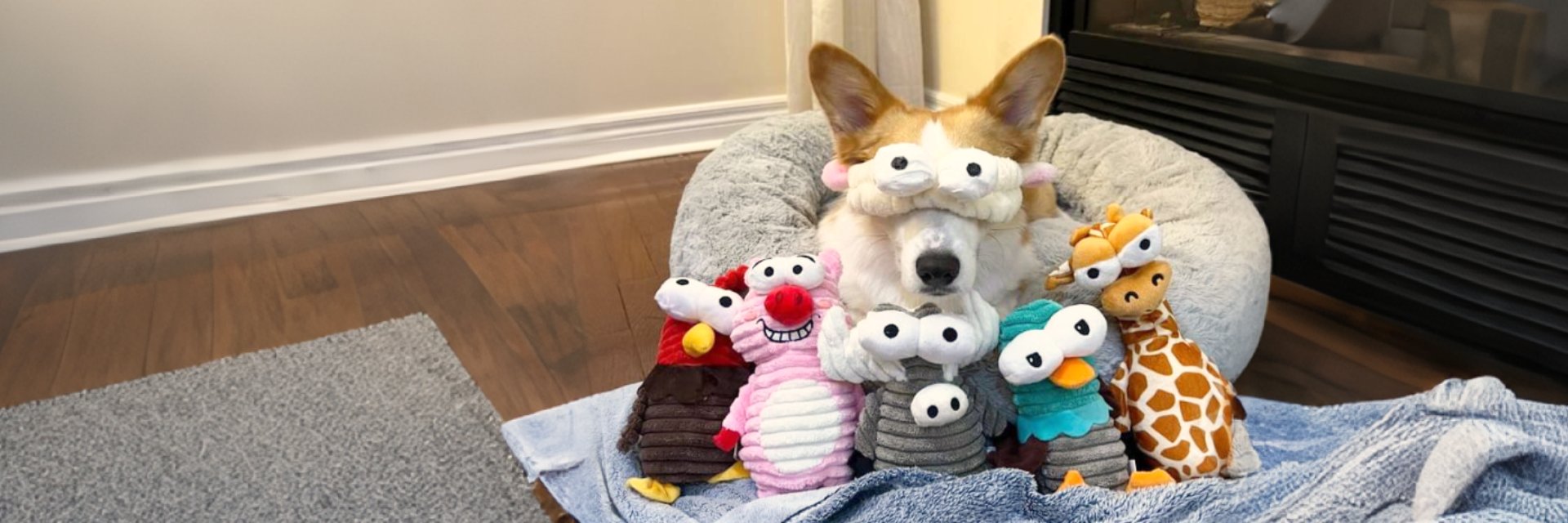
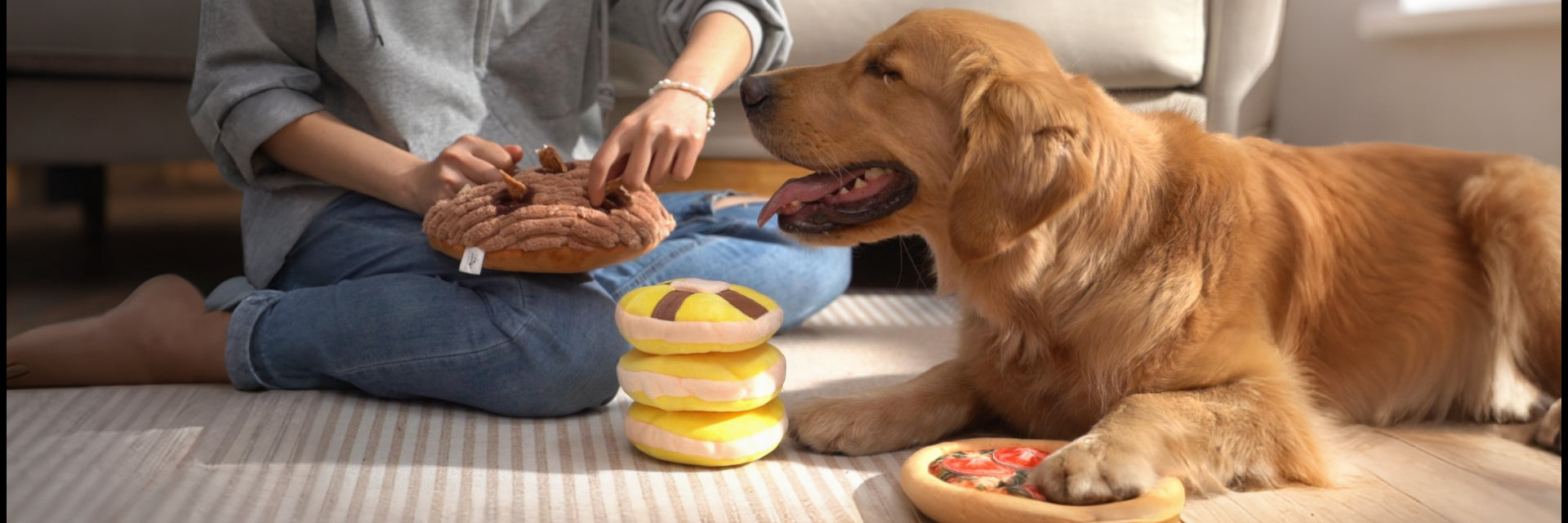
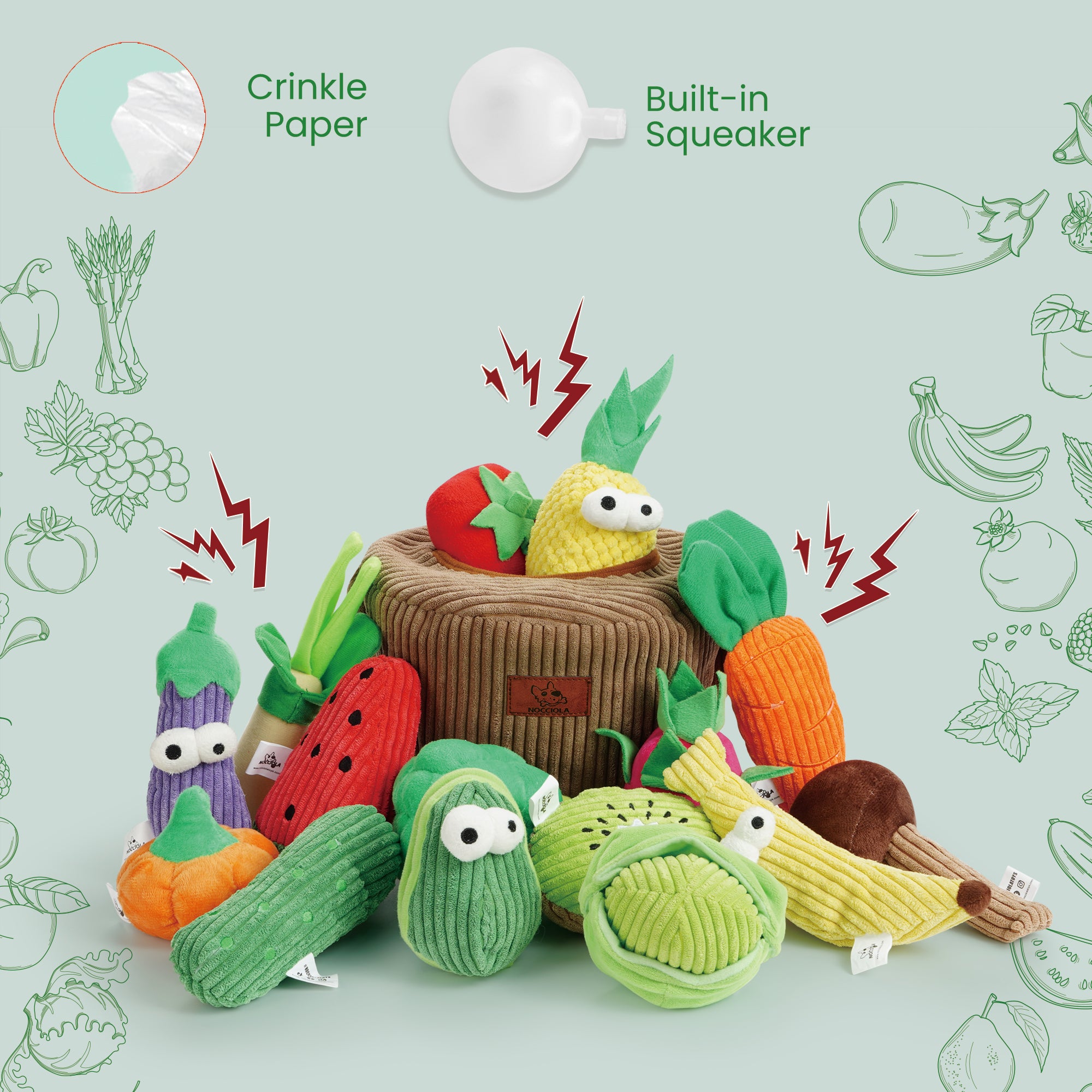
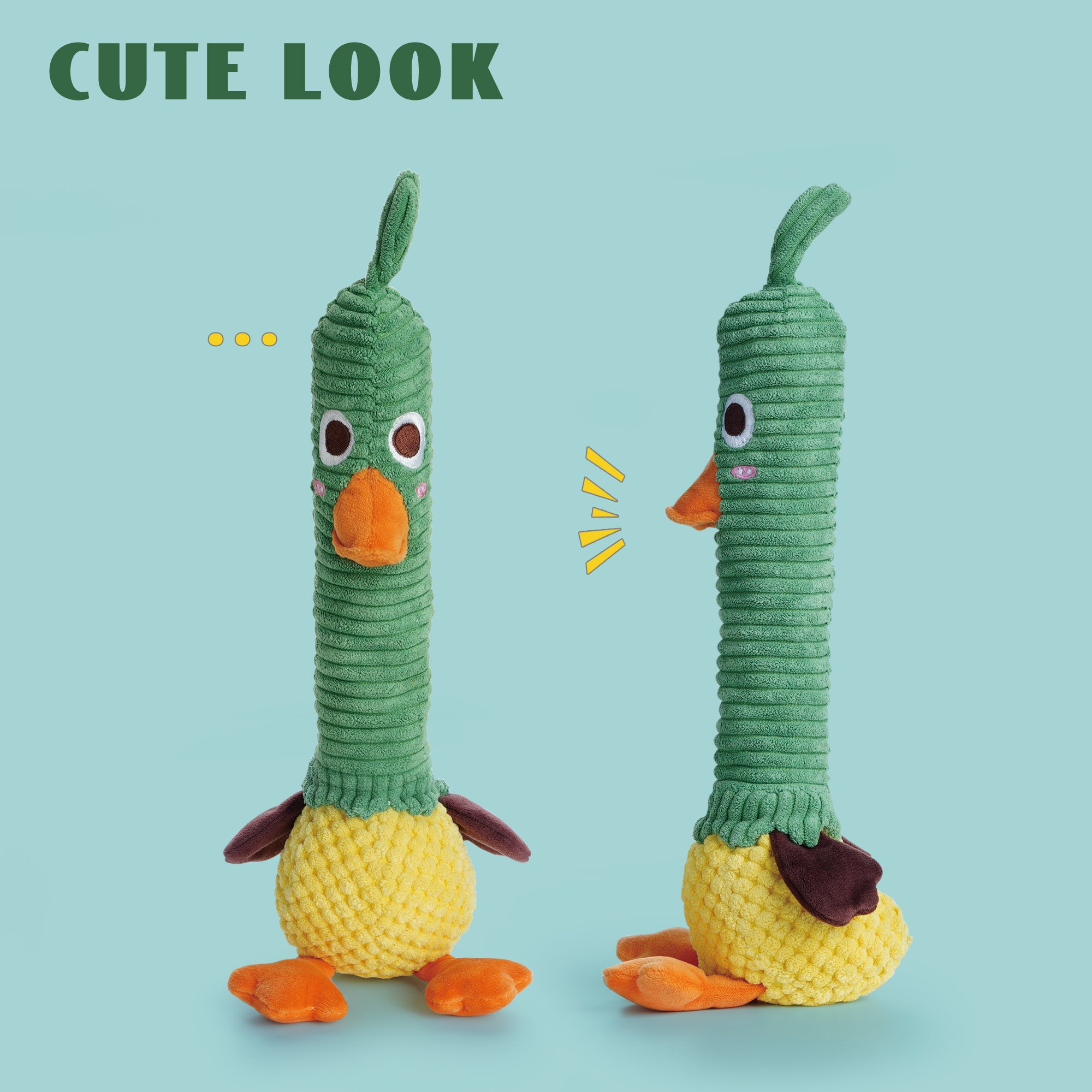
When your dog brings you a toy but keeps a firm grip on it, they usually want you to join the interaction, not simply take the toy away. They may be asking for tug, inviting a game of keep-away, or carrying something familiar while they greet you. The meaning depends on what happens when you approach and how your dog looks while holding it.
A loose, bouncy dog who nudges the toy toward your hand is often offering an invitation to play. A dog who freezes, stares, stiffens, or growls when you reach for the same toy may be worried about losing it. At Nocciola Toys, we find it useful to make that distinction before choosing either a game or a training exercise. The right response to playfulness is not the right response to possible guarding.
You do not have to make your dog surrender every toy they show you. If they are relaxed, acknowledge them and decide whether you want to play. If you need the toy back, teach a reliable release cue through trades and continued play rather than prying it from their mouth.
The short version: Bringing a toy is an approach. Keeping it is not automatically a refusal. Look for an invitation to tug or chase, then check for tension before reaching. Train “drop it” when everyone is calm, and get professional help if your dog guards the toy.
What does bringing a toy without releasing it mean?
The behavior is best understood as a two-part message. Your dog has chosen to come close to you with an object, but has not necessarily agreed to give up possession of it. Many dogs are perfectly happy to share the experience of a toy while keeping the toy in their mouth.
Think about the different things that can follow the same approach. A dog might press one end of a toy into your hand and brace for tug. Another might bounce just out of reach and glance back, hoping you will follow. A third might stand beside you holding a plush toy and settle once you say hello. The toy is the common detail, but the interaction each dog wants is different.
“Take the other end”
Your dog moves toward your hand, maintains a loose posture, and leans back when you take hold. Holding on is part of the game. This dog needs a clear start and finish to tug, not a lecture about sharing.
“Come and get me”
Your dog approaches, retreats when you reach, then circles back. That pattern may be keep-away. If you chase, your reaction can become the most rewarding part of the routine.
“Notice me”
Your dog carries a toy over when you arrive home or turn your attention elsewhere, yet does not position it for tug. A calm greeting or a brief shared activity may be what they were after.
“Please do not take this”
Your dog becomes still or tense as you move closer. They may shift the toy away, hover over it, or warn you to back off. Treat this as a safety concern, not a play invitation.
One moment cannot tell you everything about your dog's motivation. Look at what happened immediately before they brought the toy, how they respond when you stop moving, and whether the pattern repeats with particular toys or in particular places. If your dog mainly wants you nearby while they play, our article on why some dogs play with toys only when their person is there explores that social side of play.
How to tell play from possible resource guarding
A wagging tail alone does not settle the question. Watch the entire body and pay particular attention to what changes when a hand approaches the toy. Play tends to involve movement, flexibility, and a willingness to reconnect after a pause. Concern about losing the toy often shows up as sudden stillness or escalating tension.
| What you notice | More consistent with play | Reason to stop reaching |
|---|---|---|
| Body and movement | Loose, bouncy movement; the dog readily comes back after you pause | Stiffening, freezing, or hovering tightly over the toy |
| Response to your hand | Moves a reachable part of the toy toward you | Pulls the toy away while becoming tense or blocks your approach |
| Face and attention | Relaxed expression and shifting attention during the game | Hard stare, lip lift, or intense tracking of your hand |
| Vocalization | Play sounds occur alongside an otherwise loose, responsive body | Growling paired with freezing, stiffness, or attempts to keep you away |
| What happens if you disengage | Invites you back into the activity | Remains tense around the item or moves away to protect it |
Some dogs vocalize during enthusiastic tug. The sound matters, but the surrounding behavior matters more. If you are unsure whether a growl is playful, do not test the dog by grabbing harder. Stop, give them room, and choose a calmer activity.
If your dog freezes, growls, snaps, or has bitten when approached: Do not reach into their mouth, corner them, or punish the warning. Move children and other pets away, give the dog space, and seek help from a qualified reward-based trainer or veterinary behavior professional. If the item is dangerous, prioritize keeping people safe and contact a professional for guidance rather than risking a bite.
Resource guarding is not limited to dogs that look overtly aggressive. A dog who repeatedly turns away, clamps down harder, or leaves when people approach may be trying to avoid a confrontation. Respecting those early signals gives you a safer starting point for future training.
Why taking the toy by force usually misses the point
If your dog thought you were playing tug, pulling harder may make the game more exciting. If they wanted a chase, following them rewards the getaway. If they were worried you would take their favorite toy, forcibly removing it confirms that worry. The same action can create different problems depending on what the dog was communicating.
Instead, decide what you actually need. If the toy is safe and your dog is content to carry it, you may not need a handoff at all. If you want to play, offer a predictable game. If you must put the toy away, use a voluntary trade. This simple shift keeps the interaction clear: approaching you does not always mean losing what they brought.
A useful rule for toy handoffs is to make releasing worthwhile before you make it necessary.
What to do in the moment
If your dog wants tug
Take hold only if they are loose and inviting you to play. Grip a portion of the toy that keeps your fingers comfortably away from their mouth. Keep the movement controlled, avoid jerking upward, and pause if your dog becomes overexcited or starts catching your hands. When you want a release, stop moving the toy and use a cue they have already learned. If they have not learned one yet, offer a trade instead of repeating a command they do not understand.
If your dog wants you to chase
Resist the urge to follow. Stand still or turn away, then invite your dog back without reaching for the toy. You can offer another toy or a suitable treat. When they let go, calmly reward the choice. If you always launch into pursuit, the routine can become “show the toy, run away, get chased” rather than a voluntary handoff.
If your dog just wants to greet you
Say hello and let them carry their toy. They may be excited to see you and comfortable keeping something in their mouth. You can sit nearby, invite a brief game, or simply let the greeting pass. There is no benefit to demanding a release when you do not need the item.
If your dog looks tense
Stop reaching and create distance. Avoid hovering over them, pulling on the toy, or trying to prove that you can take it. If the behavior repeats, address it with a professional rather than practicing handoffs in a situation where someone could be bitten.
How to teach “drop it” without ending the fun
A release cue means “let the item go,” not “playtime is over.” That distinction matters to a dog who loves holding toys. Practice outside a tense encounter, with an ordinary toy and a reward your dog wants. Keep sessions relaxed and stop before either of you gets frustrated.
-
Choose one cue.
Pick “drop it,” “give,” or another short phrase and use it consistently. Everyone in the household should mean the same action when they say it.
-
Begin with an easy toy.
Choose something your dog enjoys but can release without worry. Do not start with the one item they seem most protective of, and do not use a toy they are chewing apart.
-
Offer a worthwhile trade.
While your dog holds the toy, present a suitable treat or another appealing toy. When they open their mouth and release, mark the moment with a cheerful “yes” and deliver the reward. At first, say your cue as the release happens so the word becomes linked to the action.
-
Give the toy back when appropriate.
Return it after some successful trades, or restart a gentle game. This teaches your dog that letting go can bring something good and does not always mean the toy disappears.
-
Move the cue earlier.
Once your dog readily releases for the trade, say the cue just before you present the reward. If they do not let go, make the trade easier rather than saying the cue over and over.
-
Practice during ordinary play.
Try the cue in a familiar room, then in other calm settings. Gradually use more engaging toys only while your dog remains relaxed and successful. Keep rewarding releases, sometimes with a treat and sometimes with another round of play.
A second toy can be particularly helpful for a dog who enjoys movement. Offer it, wait for the first toy to drop, then animate the second one. For a dog who becomes tense around toys, do not treat this as a do-it-yourself exercise in taking prized possessions. Get individualized guidance first.
Make the reward match the situation. A dog who came over to play may value the game restarting more than a snack. A dog who is ready to settle may prefer a treat and a calm finish. Watch what makes your dog willing to release without becoming more frantic.
How to play tug with a dog who loves holding on
Tug can be a good fit for a dog who keeps presenting one end of a toy. The point of tug is that your dog holds on while you hold the other end. The skill to teach is not constant surrender; it is the ability to start, pause, release, and restart without grabbing hands or becoming overwhelmed.
- Use a toy suited to both participants. You need a comfortable place to hold that does not put your fingers near your dog's teeth. Your dog should be able to grip it without struggling.
- Let your dog opt in. Invite them to take the toy rather than pushing it into their mouth. If they walk away or settle with it, allow the game to end.
- Keep your movements controlled. Avoid yanking the toy upward or swinging your dog by it. Watch for signs that the game is becoming too intense.
- Build in pauses. Hold the toy still and use the trained release cue. Reward the drop, then offer another turn when your dog is ready.
- End clearly. When the game is over, trade if needed, put the toy away calmly, and move on to another activity.
For a dedicated tug option, the Turtle Squeaky Dog Toy has a rope-free shell and grip handles designed for interactive tug. Its dual squeakers respond to chewing and tugging. Choose a toy your dog can use comfortably, and supervise play even when a toy has reinforced construction.

Tug should remain cooperative. If your dog starts guarding the toy when the game pauses, stop trying to take it and reassess. A different toy may help with hand placement, but no toy substitutes for a safe approach to guarding.
Choosing a toy for the way your dog actually plays
A toy can make a game easier to understand, but it cannot teach sharing by itself. Match the design to what your dog is trying to do, then practice the release separately. We use three questions when recommending a play setup: Can the dog carry the toy comfortably? Can a person interact without crowding the dog's mouth? Can the toy withstand this dog's style of play under supervision?
For dogs who invite tug
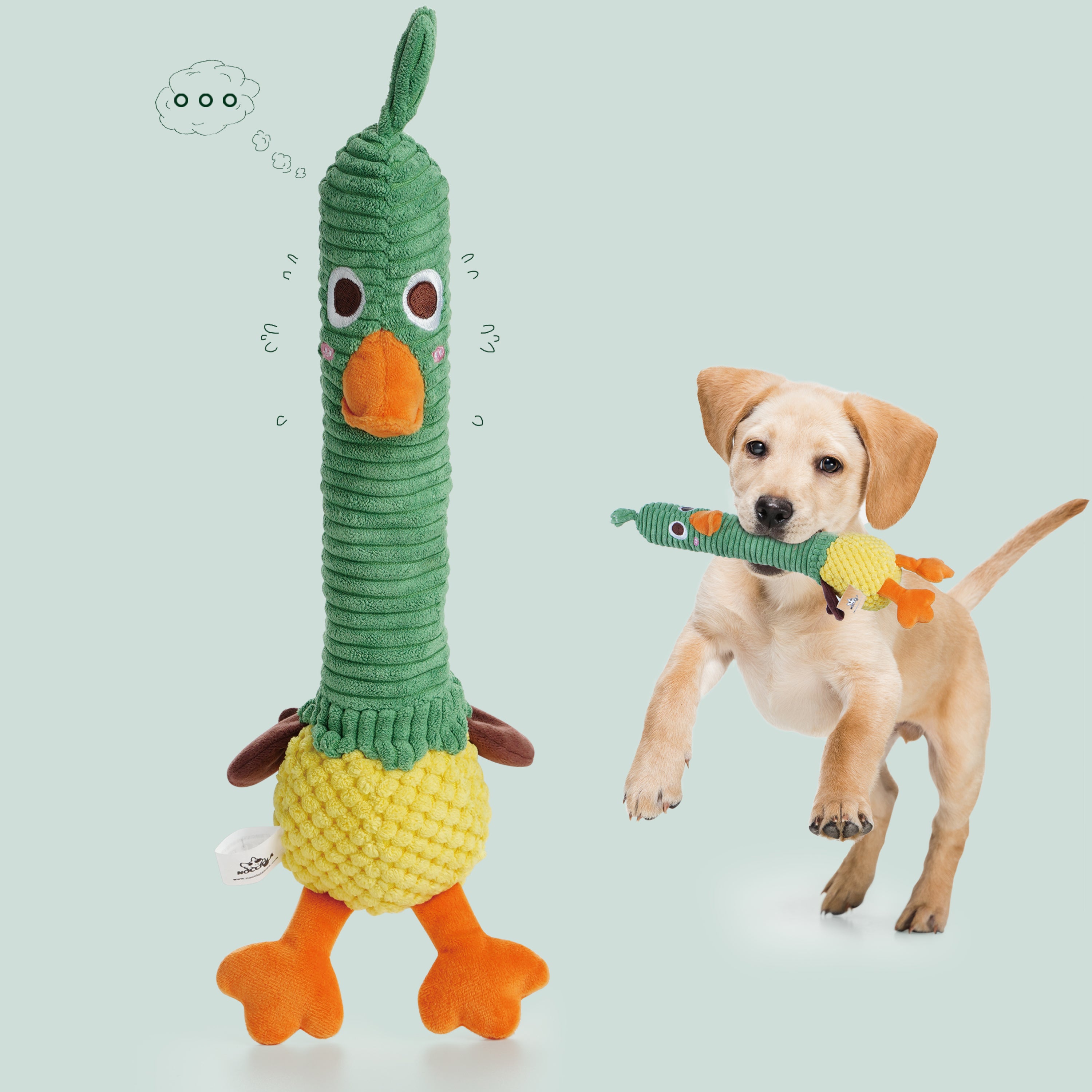
Look for a shape that gives both of you a place to hold. Alongside the turtle, the Ring Snake Squeaky Dog Toy is designed for interactive tug and has a ring shape, textured surfaces, a low-tone squeaker, and reinforced stitching. A secure grip makes it easier to pause the game without grabbing at the part your dog is holding.
For dogs who like carrying and returning
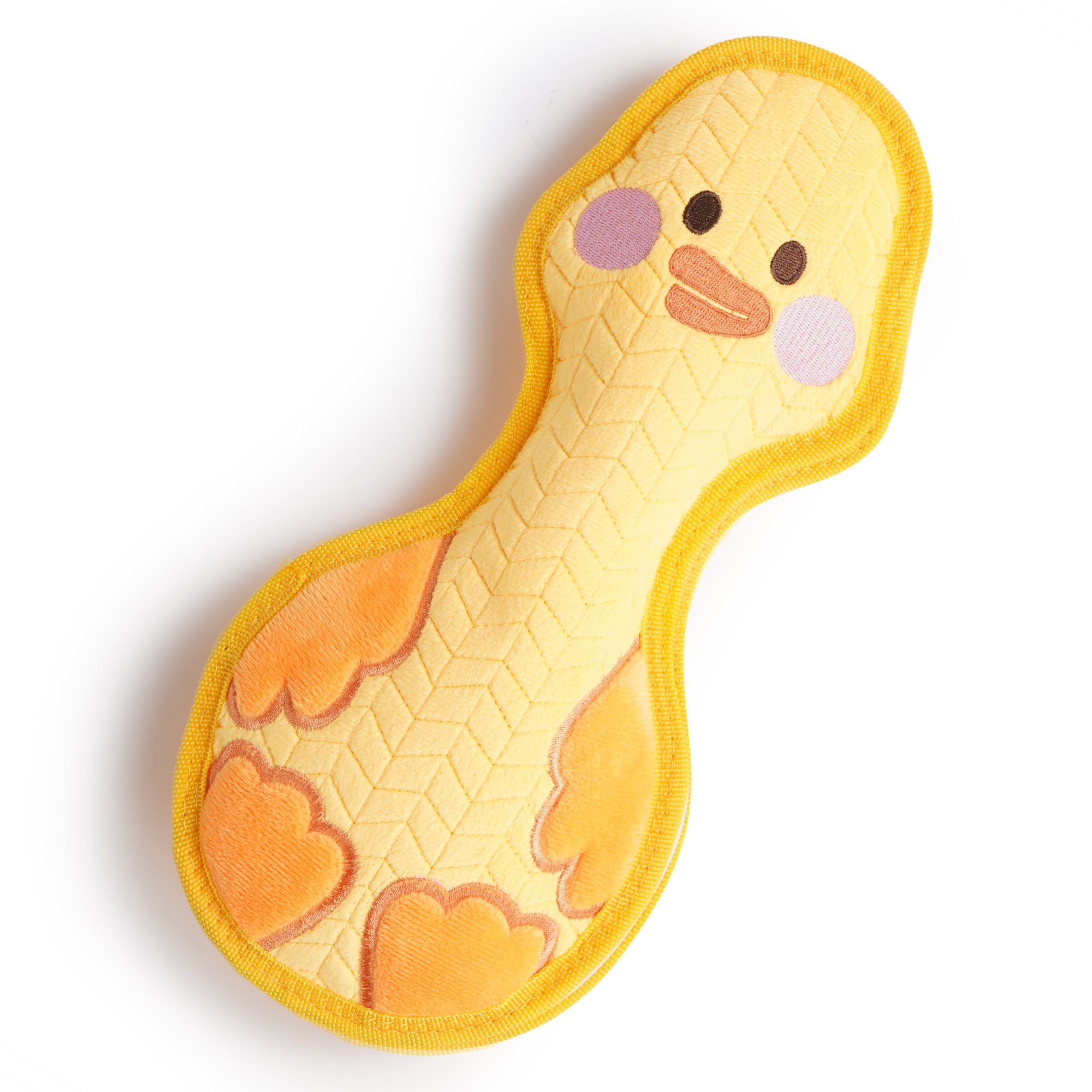
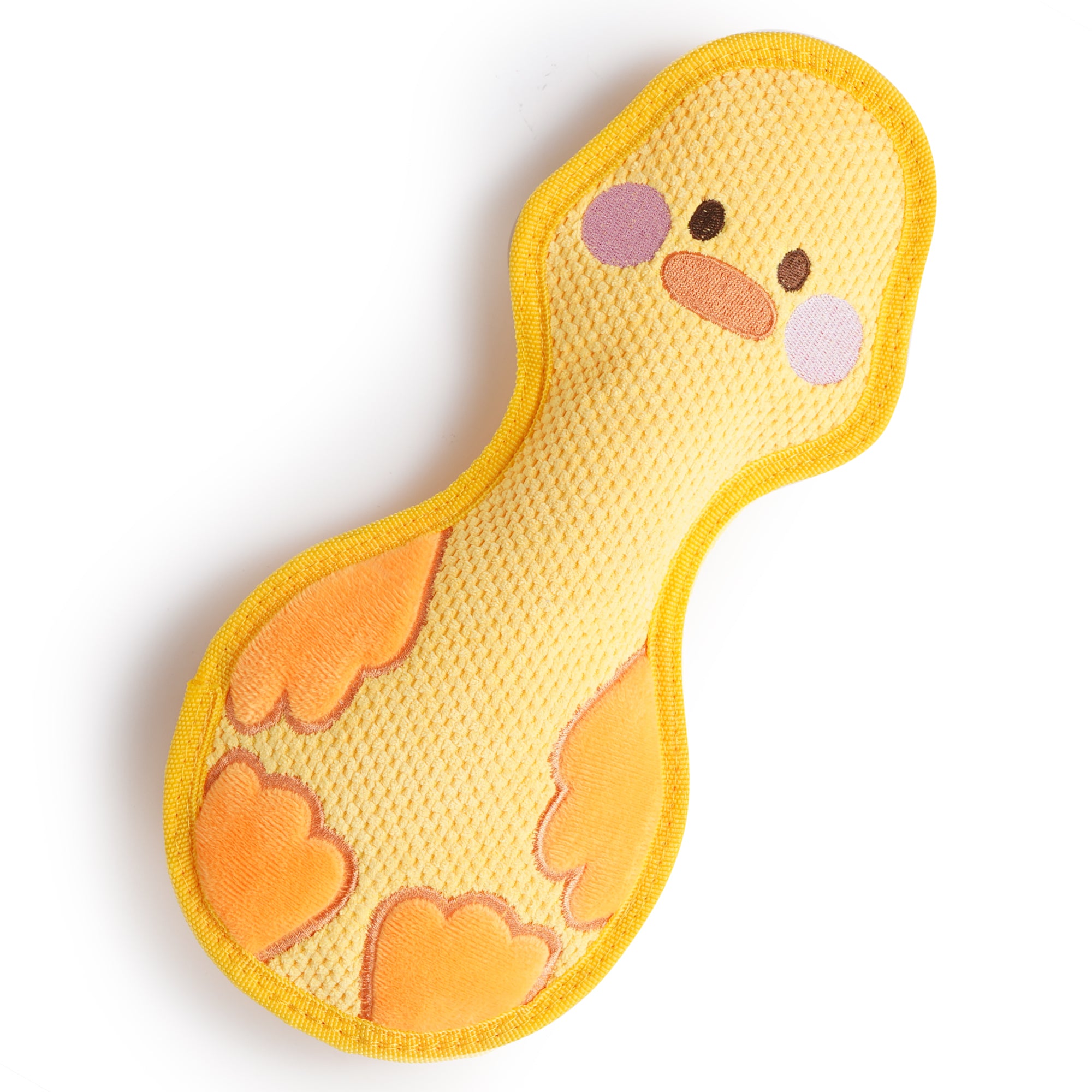
A toy that is comfortable to pick up may support a relaxed “bring it over” routine. The PAWO Funny Cool Dog Toy is a disc-shaped plush with a squeaker and crinkle paper. If your dog brings it over but does not offer a handhold, let them carry it and use a separate toy when you want to practice a handoff.
For dogs who want a different kind of interaction
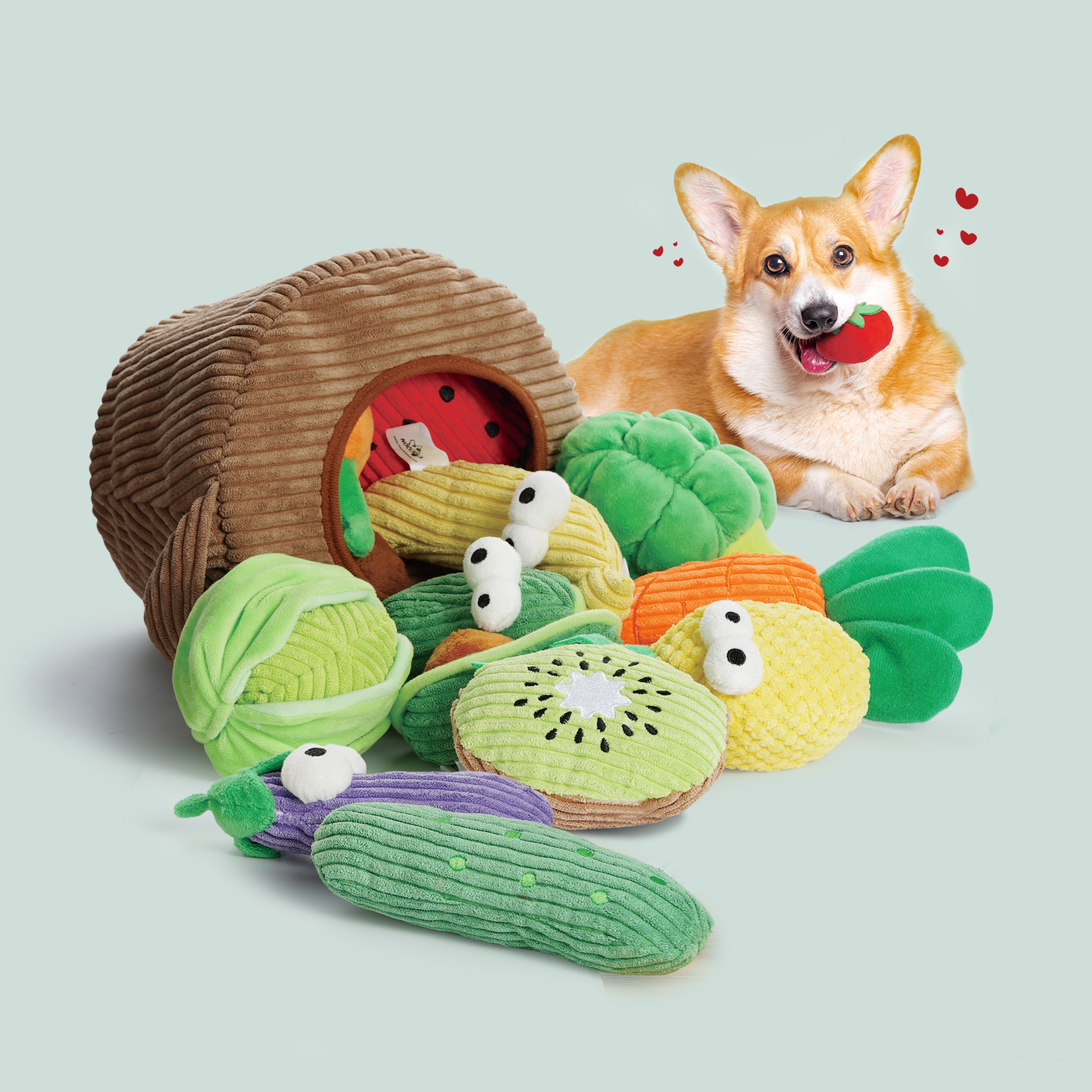
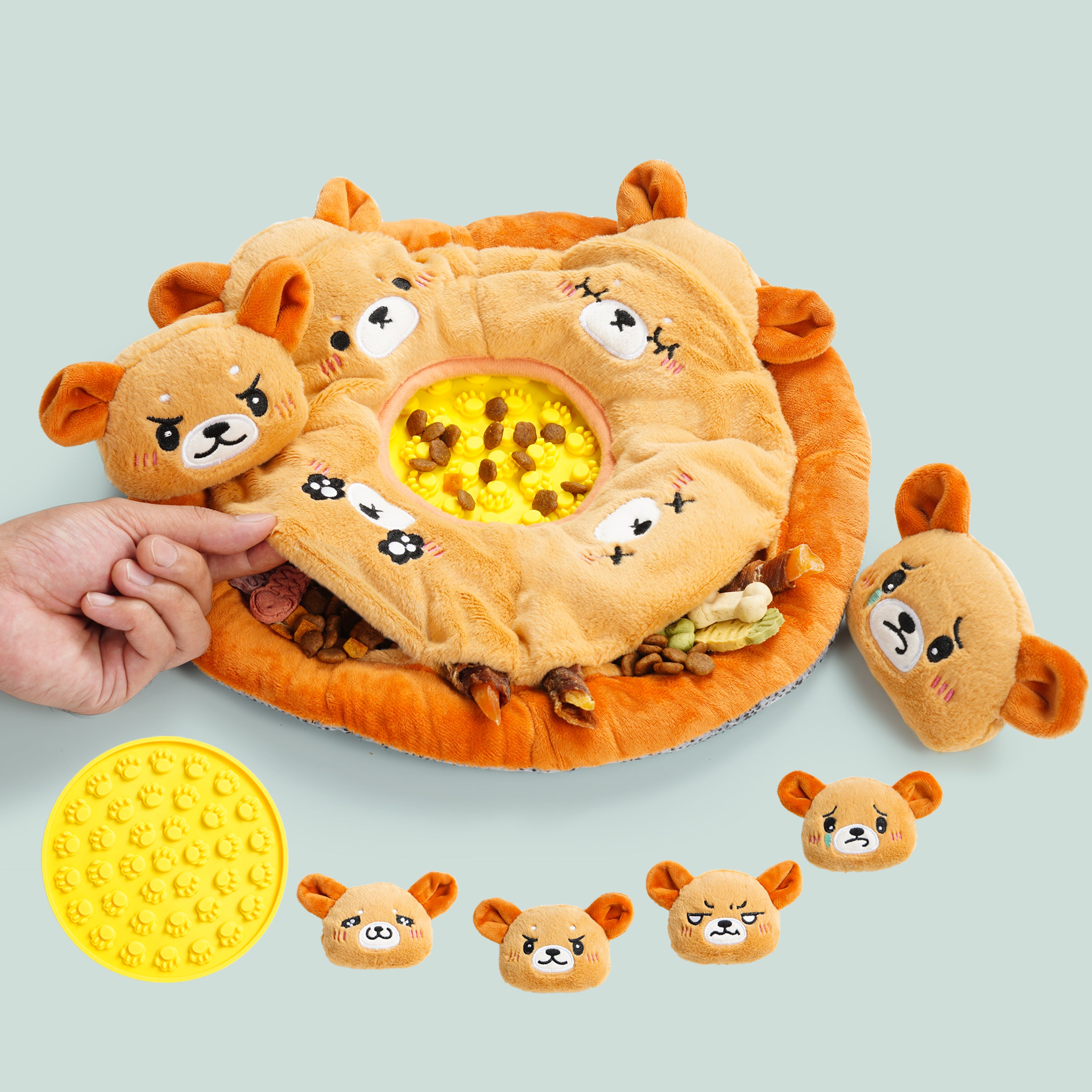
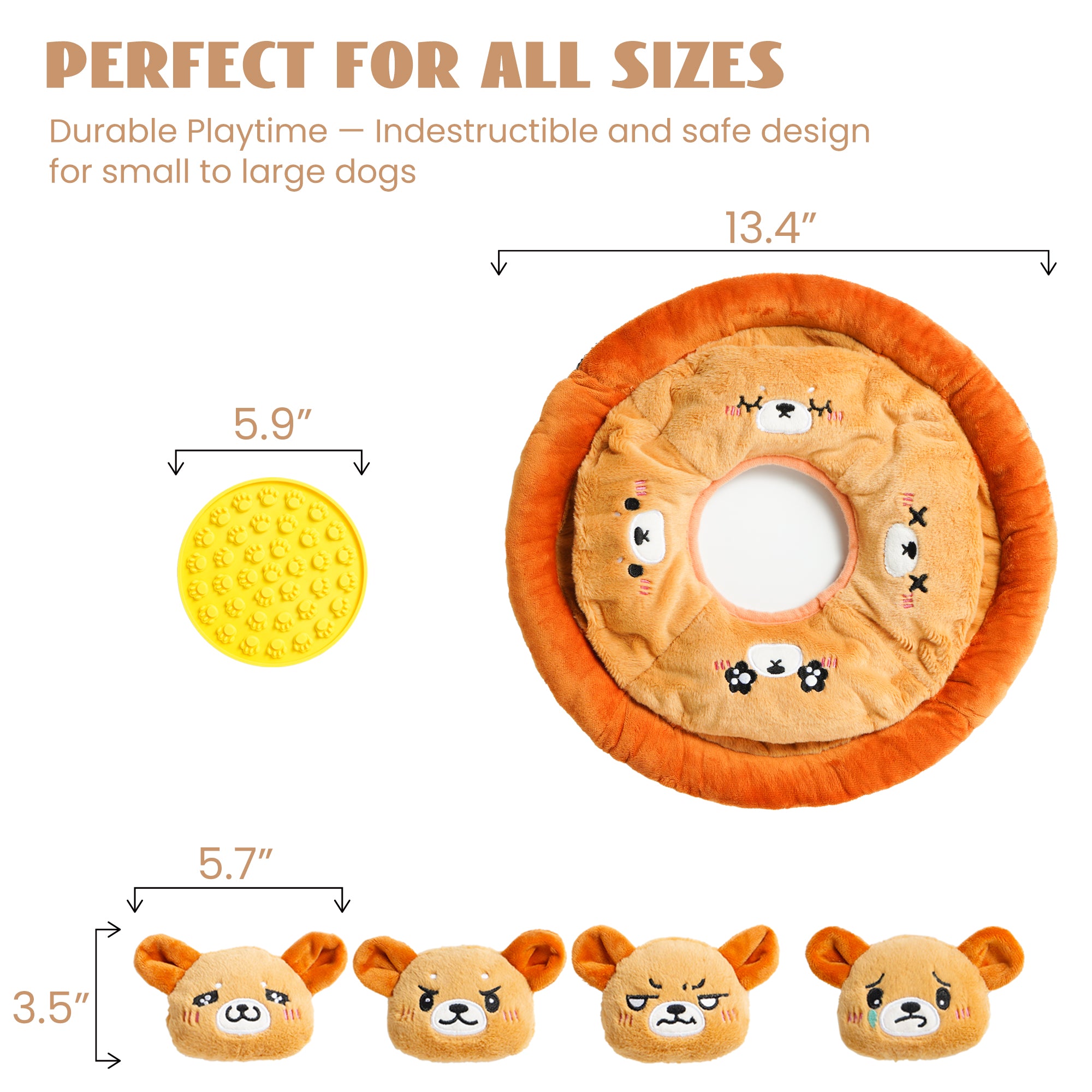
Not every shared activity has to be fetch or tug. The Plush Dinosaur Dog Toys set includes a larger plush dinosaur with a fastener-sealed belly and removable mini fossil toys. You can hide the small toys or suitable treats inside for a supervised discovery game. This gives a dog who loves finding and carrying objects another way to engage with you without turning every approach into a contest over one toy.
Choose a size that suits your dog and check the individual product before buying. Our general sizing guidance is Small for dogs under 20 pounds, Medium for 20 to 49 pounds, and Large for dogs over 50 pounds; dogs with strong chewing habits or large jowls may need to size up. Product-specific suitability matters too. The Fuzzwoof Squeaky Plush Alpaca Dog Toy, for example, is intended for carrying, fetch, and tug, but is not recommended for very aggressive chewers.
Inspect any toy regularly and remove it if seams split, stuffing becomes accessible, or pieces can be swallowed. A dog who carries a toy gently and a dog who methodically dismantles it need different supervision and toy choices. For more on that distinction, read our guide to choosing plush toys for chewers.
Best practices for calmer toy handoffs
Once you understand the behavior, small changes to your routine can prevent a harmless standoff from becoming a frustrating one.
- Ask before reaching. Notice whether your dog is bringing the toy into your space, offering an end to hold, or retreating as your hand approaches. Respond to the invitation they are actually making.
- Do not turn every delivery into confiscation. If your dog repeatedly loses a favorite toy as soon as they bring it over, approaching you may become less appealing.
- Keep a trade available. A suitable treat or another toy gives you a way to request a release without competing over the object in your dog's mouth.
- Practice when the stakes are low. Train “drop it” during ordinary play, not for the first time when your dog is already tense or holding something unsafe.
- Be consistent about games. If you do not want keep-away, do not chase a dog around the room for carrying a toy. Invite them toward you and reward returning instead.
- Let the dog rest. If they take the toy to a quiet spot and stop inviting interaction, give them space. Play is not a requirement just because a toy is present.
- Watch changes over time. New reluctance to carry, grip, or release a toy can warrant a veterinary check, especially if your dog also seems uncomfortable eating or having their mouth approached.
If your dog is newly adopted and still learning what play with people feels like, keep your expectations gentle. Our guide to helping a newly adopted dog learn to play with toys covers how to build familiarity without forcing interaction.
When to ask for professional help
Contact a qualified reward-based trainer or veterinary behavior professional if your dog repeatedly stiffens, freezes, growls, snaps, or bites around toys, or if guarding begins to involve food, beds, or other belongings. These situations call for a plan tailored to your dog and your household. Children should not practice trading or attempt to retrieve guarded items.
Speak with your veterinarian if the change is sudden or you notice possible mouth discomfort. A dog who previously released toys easily but now resists, avoids chewing, or reacts to touch may need a health assessment as well as a behavior assessment. Do not assume every change in toy behavior is a training problem.
Frequently asked questions
Does my dog bring me a toy because they want me to take it?
Not necessarily. They might want tug, chase, your attention, or simply to be near you while holding it. If they push an end toward your hand with a relaxed body, play may be the goal. If they hold it beside you and settle, a greeting may be enough.
Why does my dog push a toy into my hand and then refuse to release it?
That pattern often means they want tug. They are offering you a place to hold, not handing over ownership. If their body is loose and they readily re-engage after a pause, you can play briefly and practice a trained release cue between turns.
Why does my dog run away as soon as I reach for the toy?
They may be inviting keep-away, or they may be concerned that you will take the toy. Look for a loose, playful return versus tension and avoidance. Do not chase or corner them. Invite them back and offer a voluntary trade when a release is needed.
Is growling while holding a toy always resource guarding?
No. Some dogs make sounds during play. Look at the whole body and what happens when you pause. Stiffness, freezing, a hard stare, or escalating warnings are reasons to stop reaching and get professional guidance. When you are uncertain, give your dog space.
Should I let my dog win at tug?
It is fine for a relaxed dog to end a turn holding the toy. What matters is whether the game stays comfortable for both of you and your dog can respond to a release cue when needed. Do not use tug to test control over a dog who is showing guarding signals.
How do I get a toy back without putting my hand in my dog's mouth?
For a relaxed dog, offer a suitable treat or second toy and reward them for voluntarily letting go. Practice that exchange in low-pressure situations so it becomes familiar. If your dog is tense or has guarded toys before, do not attempt to force a trade at close range; seek individualized help.
Can the right toy stop my dog from guarding?
No toy is a treatment for resource guarding. A well-chosen toy can make ordinary tug or carrying easier, but guarding needs a safety-first training plan. If you see freezing, growling, snapping, or biting, address the behavior rather than trying to solve it with a different squeaker or fabric.
What if my dog suddenly stops releasing toys they used to drop?
Notice whether they also seem uncomfortable chewing, eating, or having their mouth approached, and arrange a veterinary check if the change is sudden. If they show tension around possession, give them space and consult a qualified behavior professional as well.
Make the next handoff an invitation, not a contest
When your dog brings a toy but will not let go, start by asking what they want to happen next. A playful dog may want you to take the other end, follow their lead, or simply notice them. A tense dog needs space, not a stronger grip. Respond to the body language in front of you, then practice voluntary releases when the moment is calm.
We design Nocciola Toys around texture, discovery, and shared play. If your dog loves bringing you something to start a game, explore our dog toys with their size and play style in mind, and make every release a choice worth making.