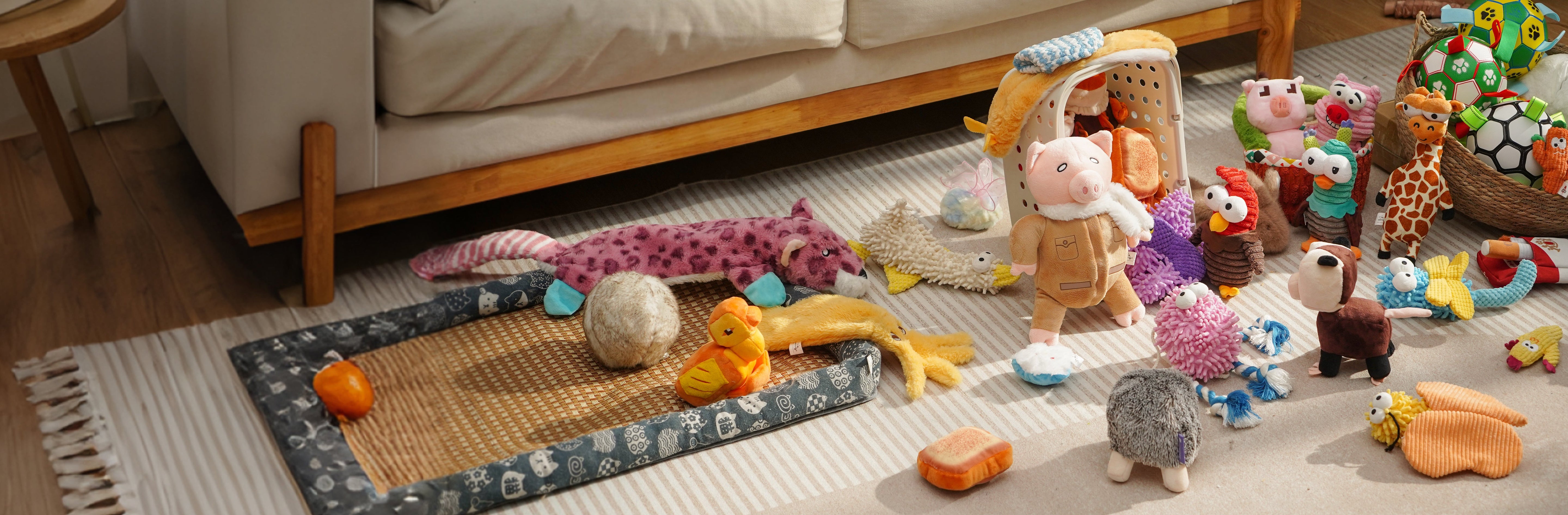
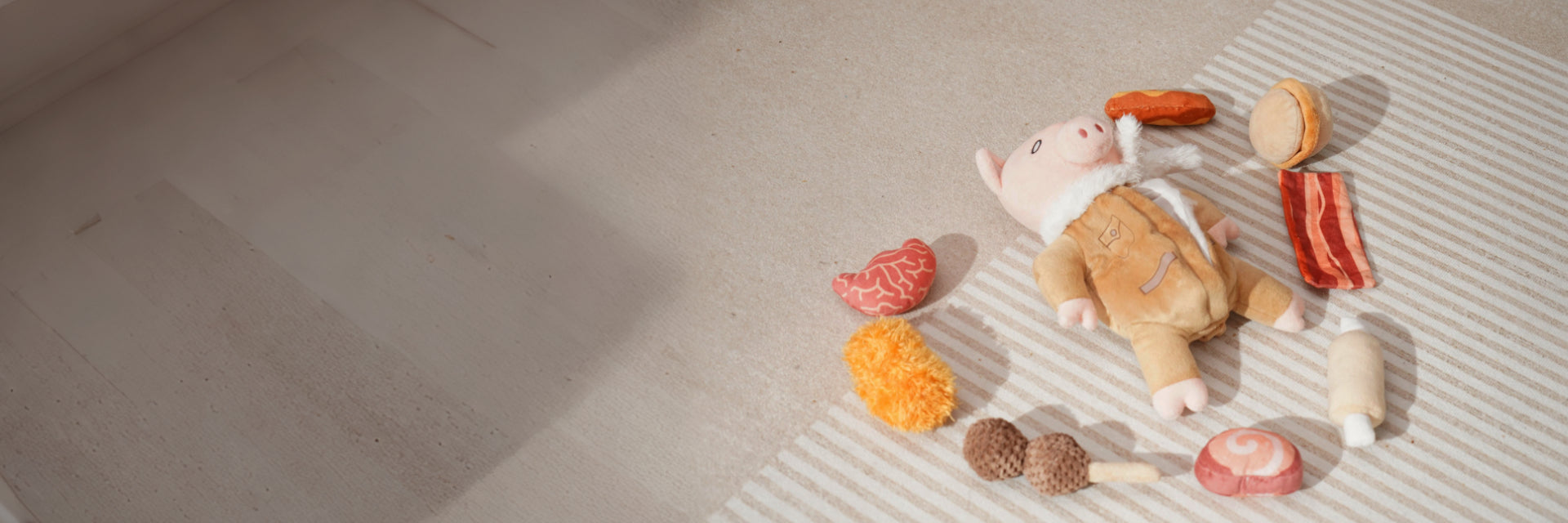
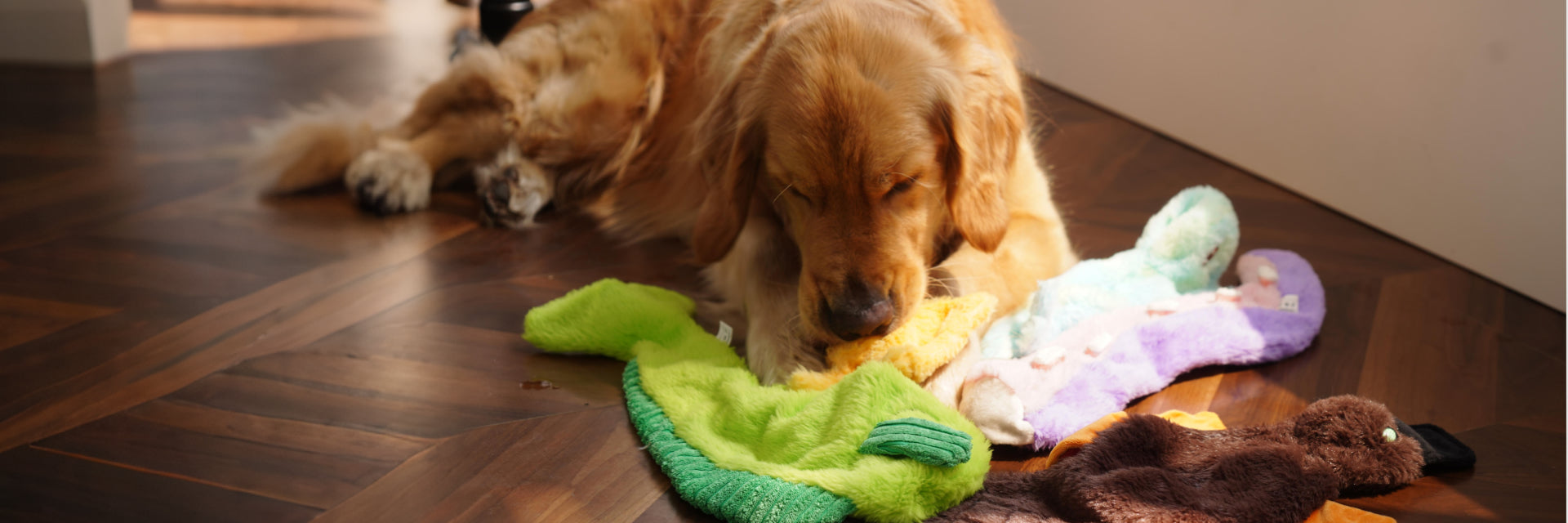
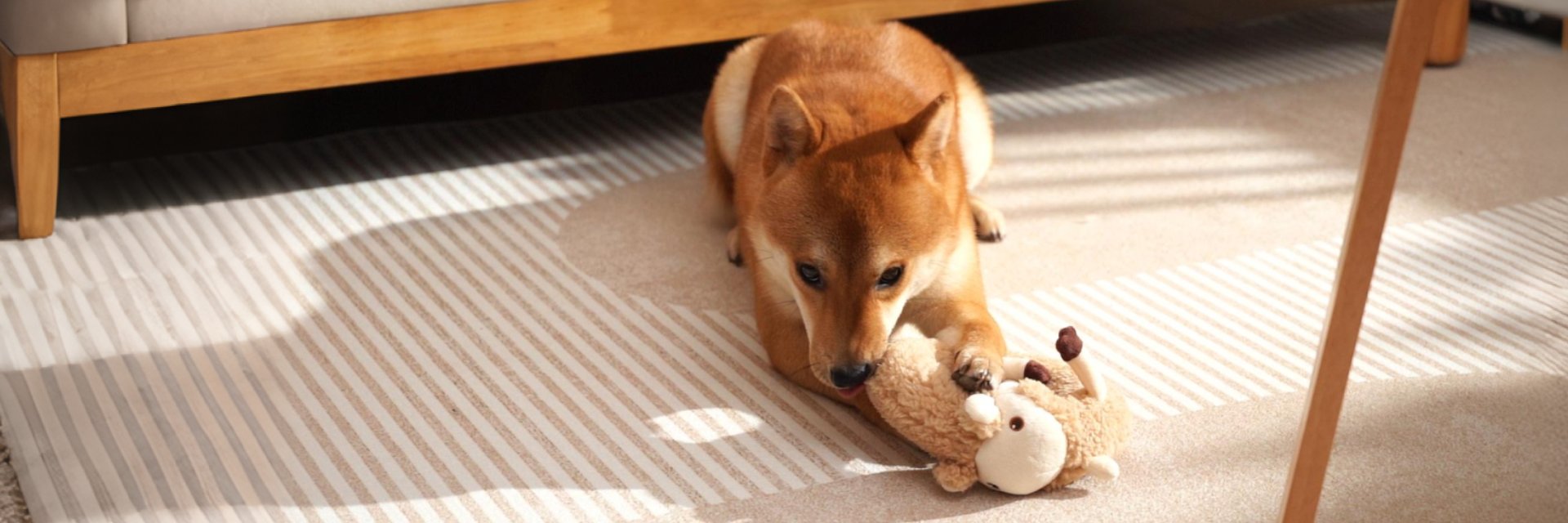
Choose apartment dog toys by the kind of play they invite, not just by whether they have a squeaker. A good everyday toy holds your dog's attention through sniffing, searching, chewing, or controlled play without repeatedly hitting the floor, sending your dog sprinting across the room, or making noise through a shared wall.
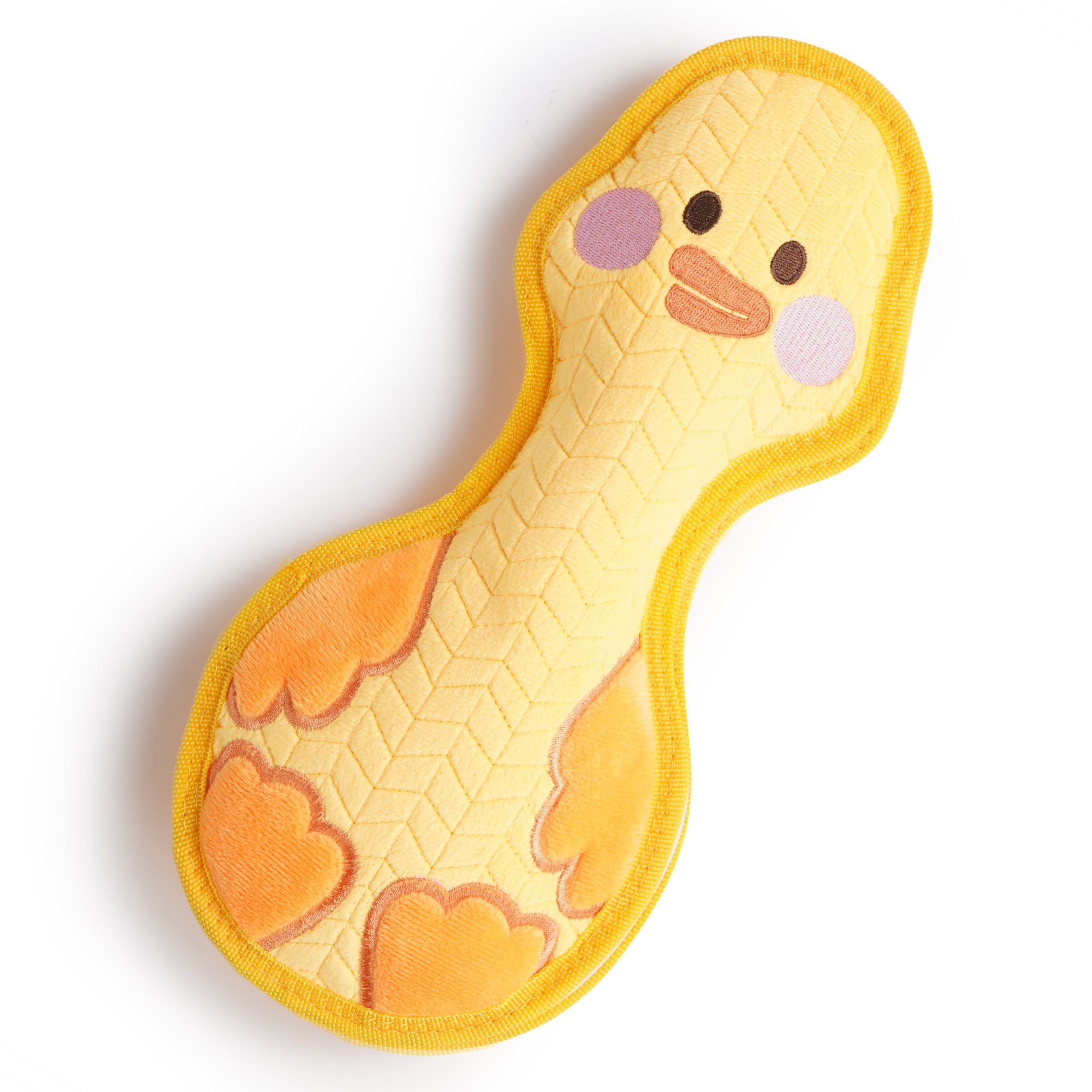
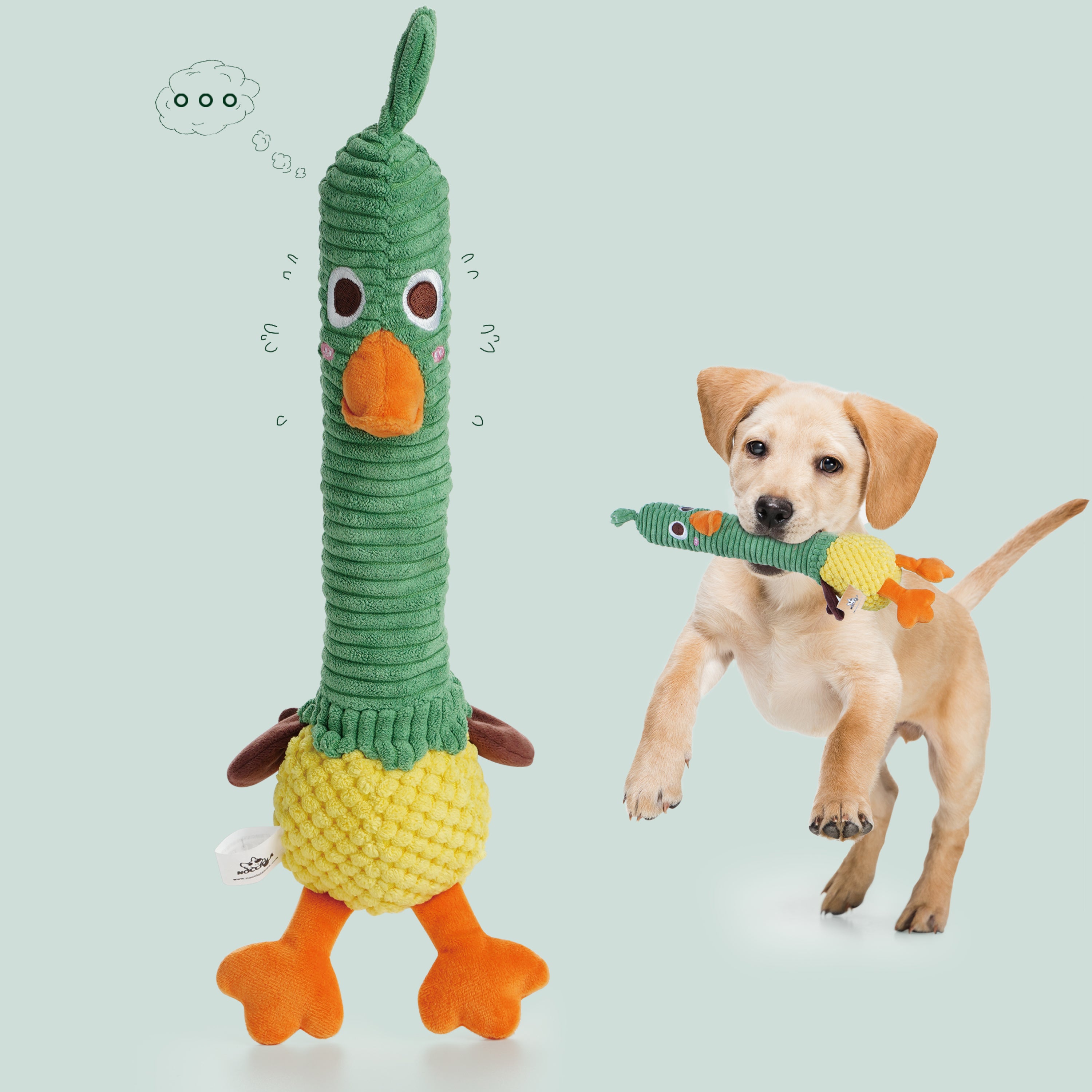
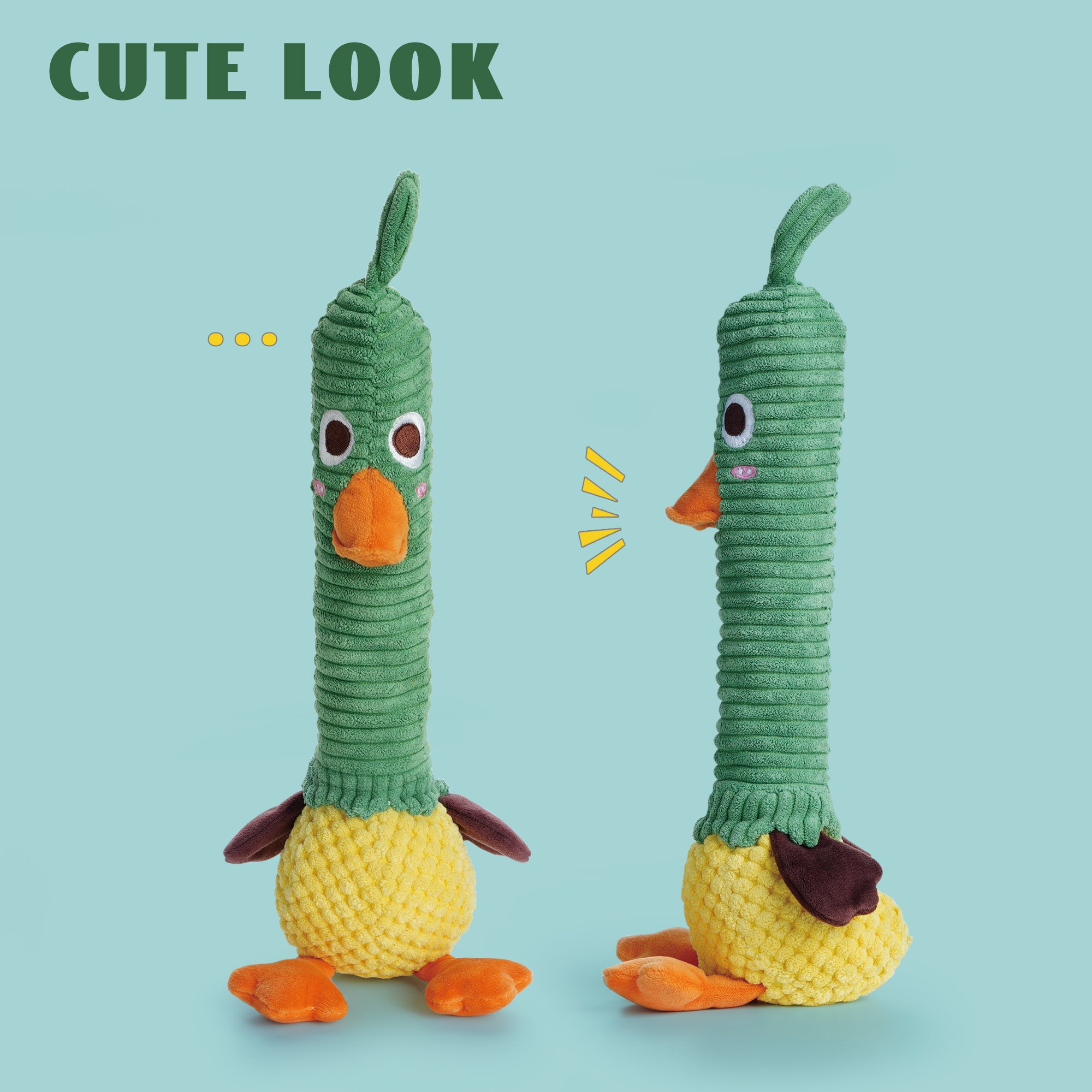
Our first choice at Nocciola Toys is a simple mix: a quiet search activity for routine enrichment, a soft toy suited to your dog's chewing style, and an interactive toy reserved for times when some noise is reasonable. The Durable Duck Squeaky Dog Toy for Aggressive Chewers, for instance, has a soft, low-tone squeaker and a textured plush body. It can work for controlled indoor tug, but it is still a squeaky toy, not a silent one.
The deciding question is not simply, "Is this toy quiet?" It is, "What will my dog do with it on this floor, in this room, at this time of day?" That distinction helps you choose engaging toys without treating your neighbors as an afterthought.
Quick rule: For shared-wall or late-evening play, favor stationary sniffing and gentle chewing. Save squeakers, vigorous tug, and anything that prompts running or jumping for appropriate daytime play.
What makes a dog toy apartment-friendly?
An apartment-friendly dog toy is one that suits the dog's size and play style while keeping sound and movement manageable in a shared building. That includes the noise the toy makes on its own, the noise it makes when it hits a surface, and the noise your dog makes while using it.
These are different problems. A squeaker creates sound at the source. A hard toy dropped on tile creates impact noise. A plush toy may make almost no sound itself, yet become part of a noisy game if your dog races after it. An engaging toy does not solve the apartment problem unless the way you use it also fits the space.
- Sound: Does it squeak, crinkle, rattle, or produce another repeated noise?
- Impact: Will dropping or rolling it make a noticeable thud against the floor, furniture, or baseboard?
- Movement: Does your dog stay focused in one area, or does the toy trigger chasing and jumping?
- Fit: Can your dog use it comfortably without easily swallowing it or pulling off small pieces?
- Interest: Does it offer something your dog actually likes, such as a scent search, texture, tug interaction, or a manageable challenge?
We design toys around texture, discovery, and playful interaction, but no single feature guarantees quiet play. The floor surface, room layout, and individual dog matter just as much as the toy label.
Start with the noise source, then choose the activity
Many apartment toy lists group products by category. That can miss the practical issue: two dogs can turn the same toy into entirely different games. A dog may carry a plush duck to a rug and settle with it. Another may shake it beside a shared wall and repeatedly activate its squeaker.
Use the following comparison as a starting point. It describes how common play activities tend to affect a shared home, not a promise that any category will always be quiet.
| Play activity | What engages the dog | Likely noise concern | Best apartment use |
|---|---|---|---|
| Sniffing and food search | Finding food through scent and exploration | Food scattering onto hard floors or a dog moving furniture to reach it | Offer in a contained area on a rug |
| Soft plush play | Carrying, mouthing, or gentle interaction | Excited shaking or a built-in squeaker | Choose according to chewing strength and supervise |
| Controlled tug | Interaction with a person | Paws scraping or the dog slipping and jumping | Keep movements low and play on a stable surface |
| Chewing | Working on an appropriate toy | Dropping a heavy toy onto hard flooring | Choose a suitable size and offer it in a settled spot |
| Indoor fetch | Chasing and retrieving | Running feet, collisions, and repeated toy impacts | Replace throws with short, gentle rolls if the room allows |
The most useful everyday choice for a noise-sensitive apartment is often a toy that gives the dog a task without asking for speed. Scent searches are a good example: you can adjust the challenge without turning the living room into a running route. For help choosing between food-search formats, see our guide to snuffle mats and treat dispenser toys.
Our framework for choosing an indoor toy
Before buying something new, we suggest working through the dog, the room, and the time of use in that order. It keeps the choice grounded in how your household actually lives.
- Identify the activity your dog already seeks out. Does your dog nose through blankets, carry soft toys, chew, ask you to tug, or chase moving objects? Build on that preference rather than assuming a more complicated toy will hold their attention. A dog that wants you involved may prefer a short tug game to a toy left on the floor.
- Check what makes noise in your room. Walk through the play area and notice hard flooring, echoing hallways, furniture legs, and shared walls. A toy that seems quiet in your hand can become disruptive when it lands repeatedly on tile. Put the activity where it is least likely to create impacts or tempt your dog to crash into furniture.
- Match size and construction to the dog. A toy should be easy to use but not small enough to swallow. For a dog that pulls hard or chews intensely, examine seams and construction rather than choosing by appearance alone. The right choice for a gentle carrier may not survive a determined chewer.
- Introduce the toy at a sensible time. Let your dog try a new squeaker or energetic game during the day. Watch what happens when they grab, drop, shake, or drag it. If the activity becomes too loud, change the location, shorten the interaction, or offer a quieter alternative.
- Keep what works and adjust what does not. Notice whether your dog remains engaged without escalating into barking, rapid laps, or repeated impacts. A toy that only becomes interesting when thrown down a hallway may be better reserved for another setting.
This approach also protects against a common mistake: buying a toy described as "interactive" and assuming the dog will use it independently. Some dogs want help learning a search game. Others enjoy a toy mainly because you participate. Our article on why dogs may only play with toys when someone is there explores that distinction.
Which toys suit different apartment play styles?
For dogs that love to sniff
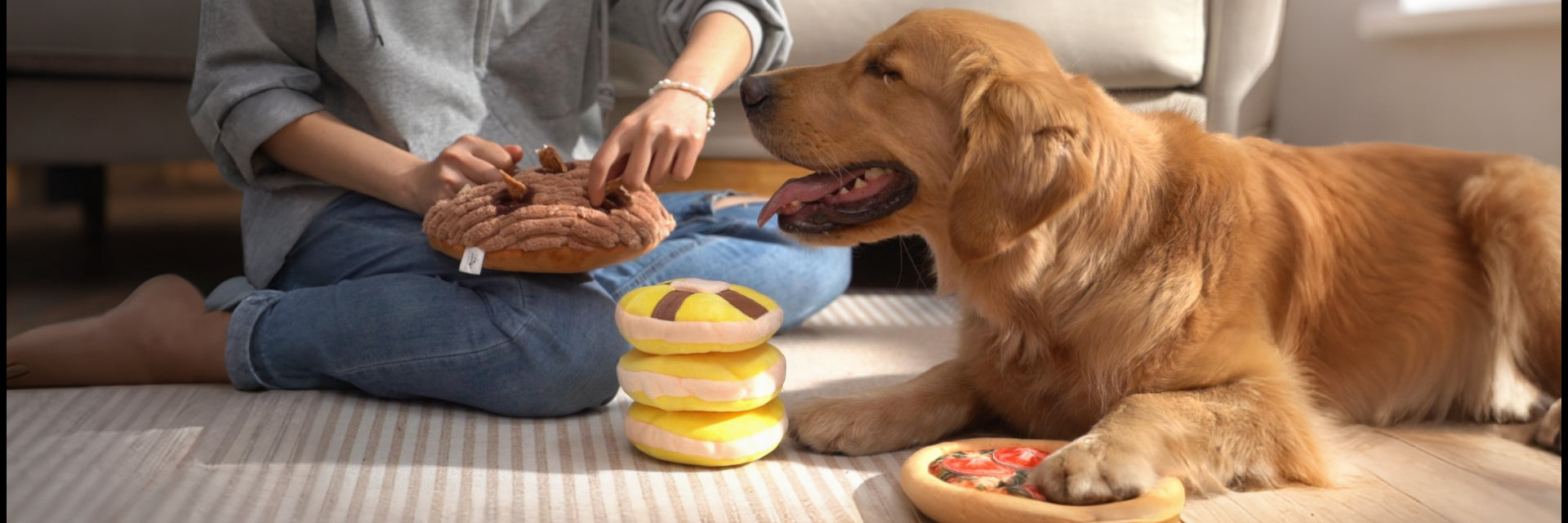
Start with an easy food-search activity on a rug or mat. Place some of the dog's regular meal where it is simple to find, then make the search more involved as the dog understands the game. Keep loose food away from furniture gaps so the dog is not pushing or scratching at the floor to retrieve it.
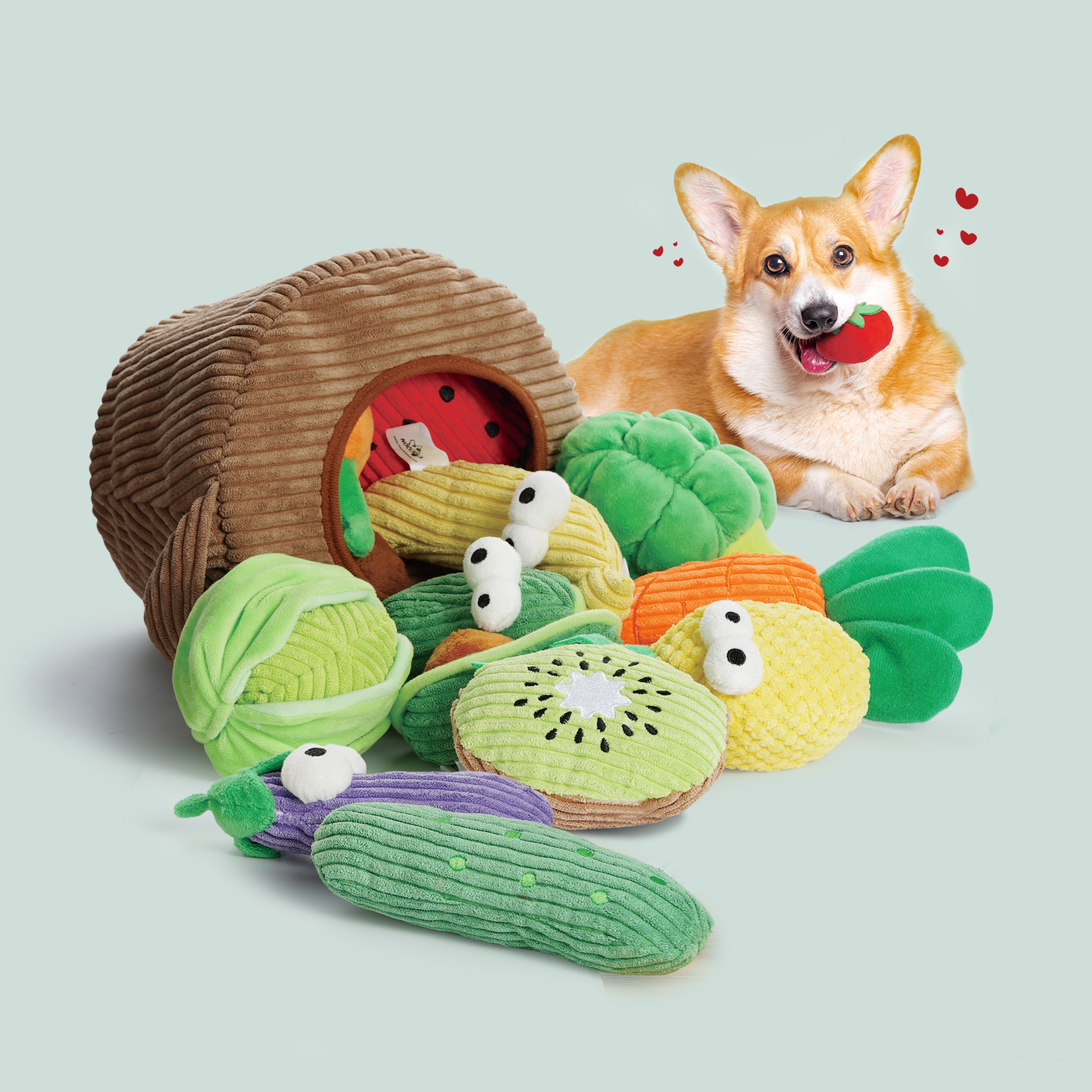
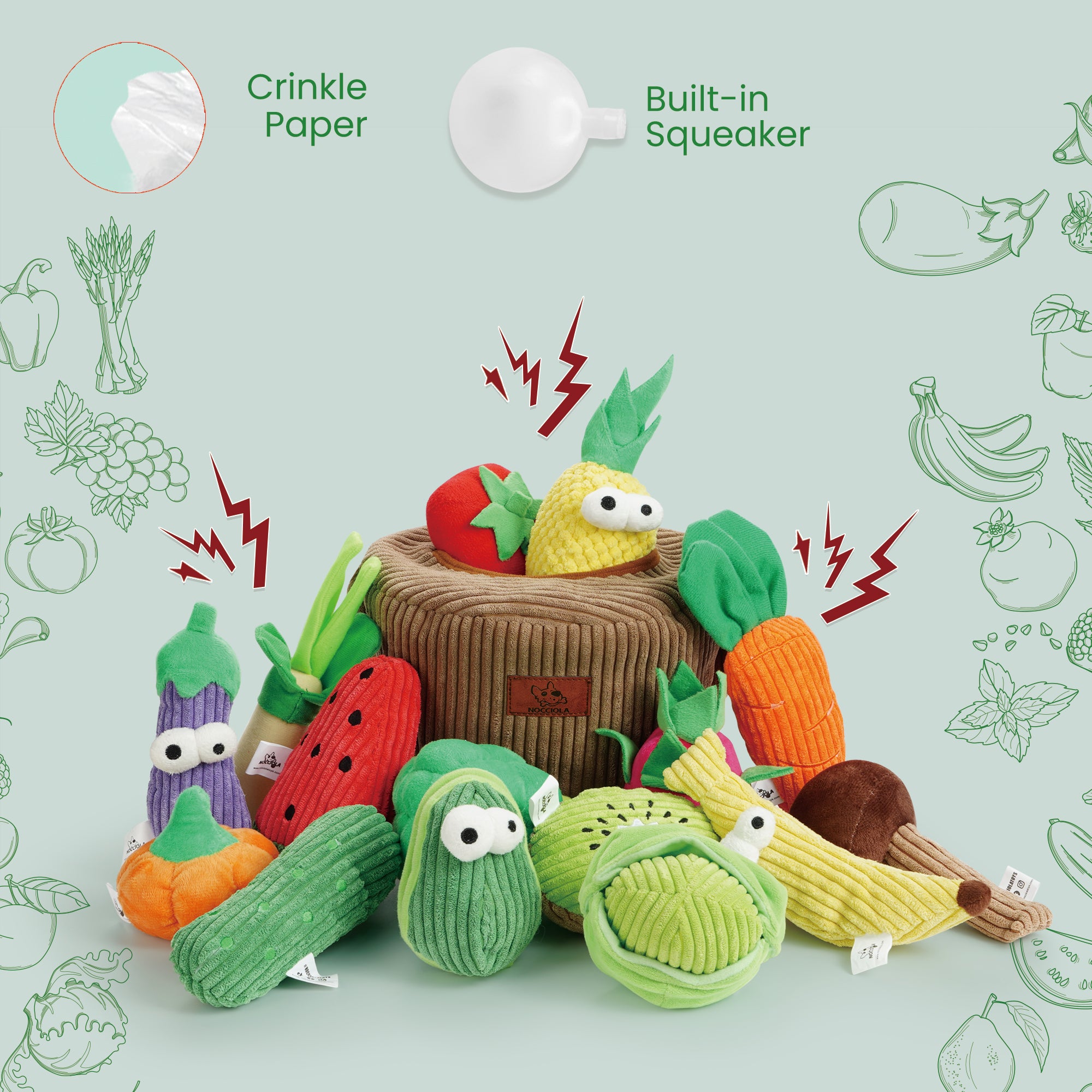
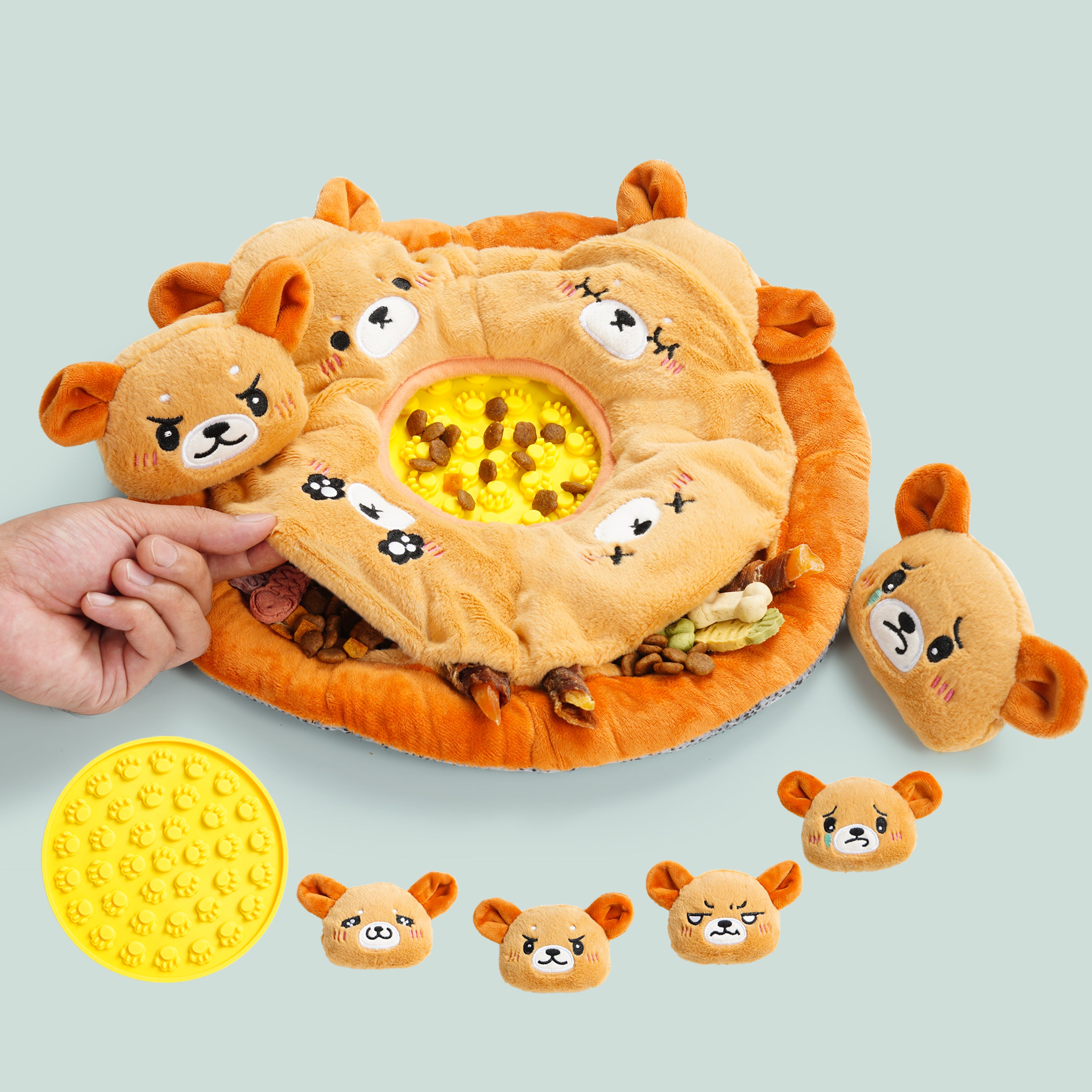
A snuffle-style toy can turn eating into a focused task without requiring open floor space. The Fuzzwoof Snacker Snake is one snuffle dog toy in our range. Watch your dog at first to see whether they search through it calmly or decide to shake and drag it instead.
For dogs that like plush toys
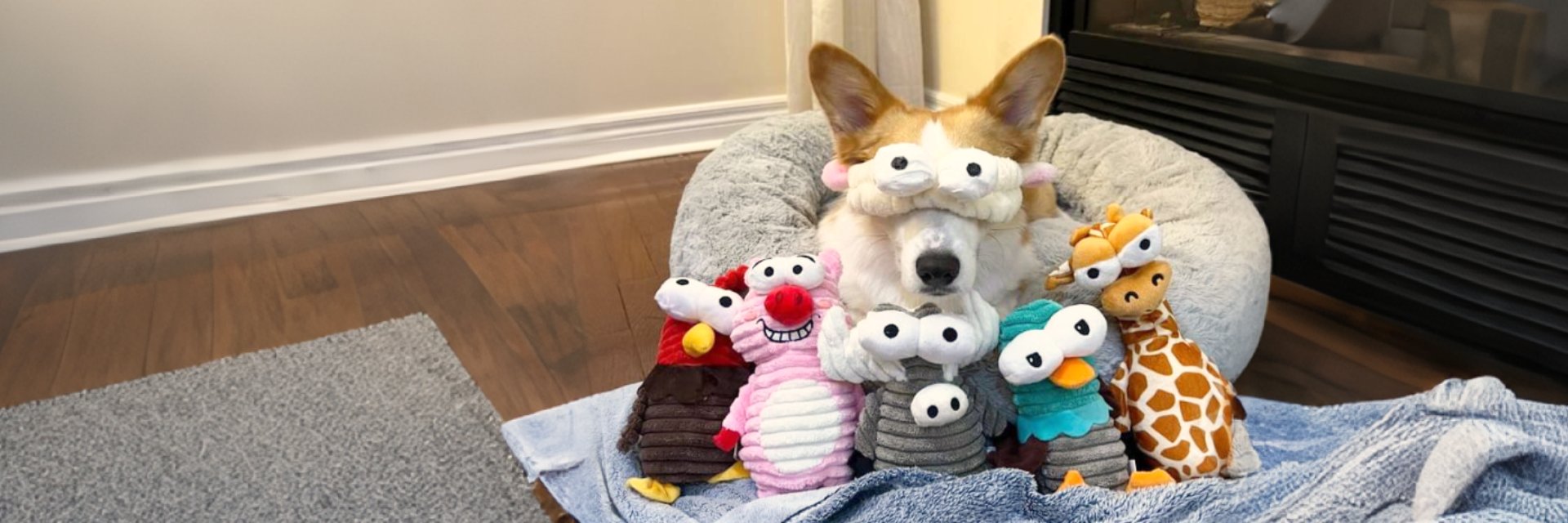
Soft toys can be a useful alternative to hard, bouncing objects. Some dogs carry them or settle with them; others immediately try to open seams. Look at what your dog does with plush, not just whether the material feels soft in your hand.
If your dog is a determined chewer, choose construction intended for harder use and supervise. Our guide to plush toys for chewers explains what to examine before you buy.
For dogs that want to tug
Controlled tug offers interaction without needing to throw a toy across the room. Keep your feet and your dog's paws on a stable surface, use smooth movements, and pause if the game turns into lunging or slipping.
Choose a toy that lets both of you hold on comfortably. If your dog brings over a toy but does not release it, read our article on why dogs bring a toy without letting go before assuming they want a fetch game.
For dogs that love a squeak
A squeaker can provide immediate feedback that keeps a dog engaged, but it is rarely the best background activity near a neighbor's bedroom. Choose the room and time deliberately. A lower-tone squeaker may feel less sharp to you, yet another household can still hear repeated squeaks.
If squeaking sends your dog into frantic play, put the toy away before quiet hours and switch to a calmer search or chewing activity.
A closer look at a low-tone squeaky toy
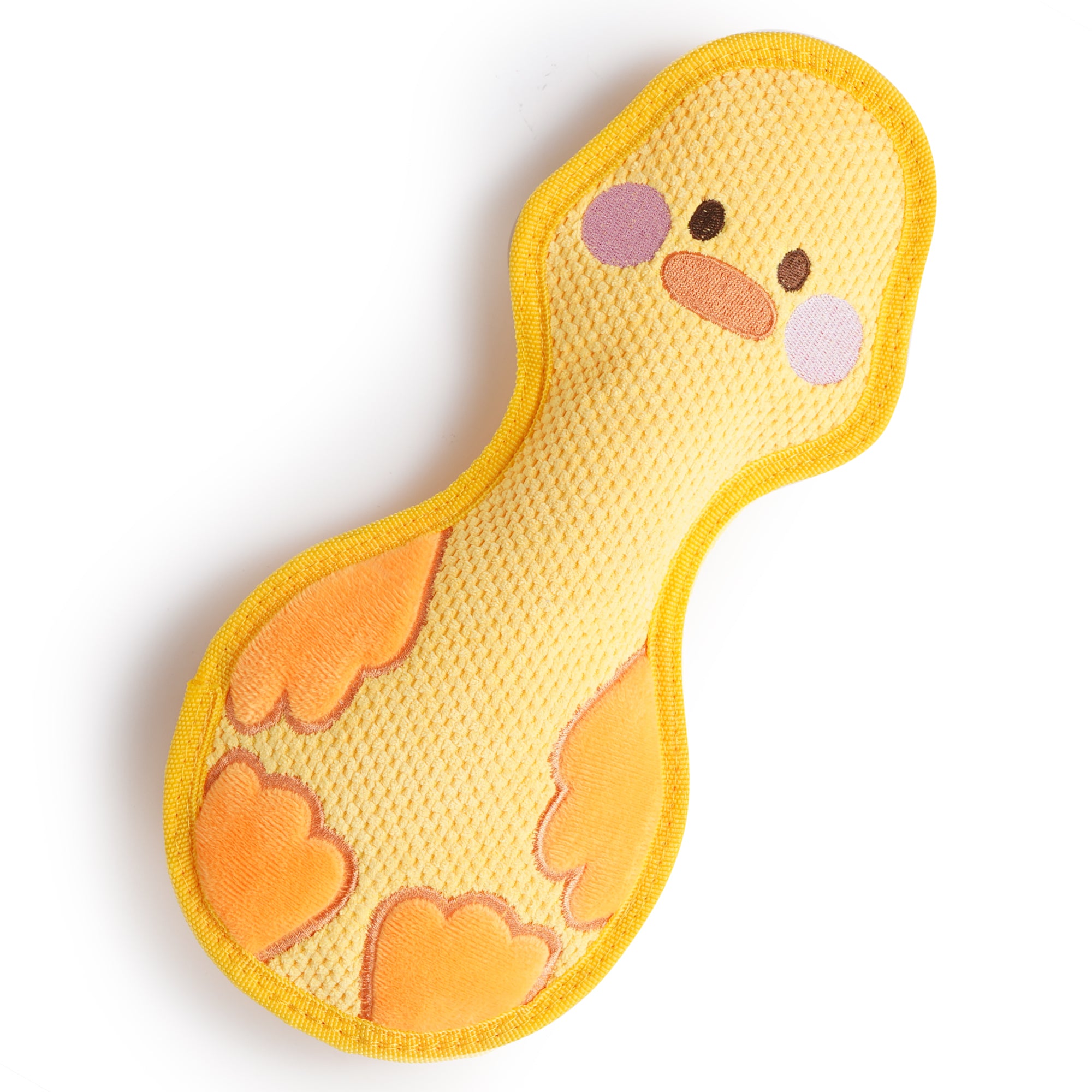
The Durable Duck Squeaky Dog Toy for Aggressive Chewers is a useful example of how to assess a toy for apartment life without reducing the decision to "squeaky" or "not squeaky." It has textured surfaces, a soft, low-tone squeaker, cotton filling, double-layer construction, and reinforced stitching. Its shape and comfortable weight are designed for interactive tug.
Those details make it a practical candidate for supervised play with a dog that enjoys plush and tug. They do not make it soundless. If your dog repeatedly bites the squeaker beside a shared wall or shakes the duck over bare flooring, change where or when you play.

Owners' experiences also show why fit matters. One customer described the duck as "soft, durable, not loud" for their dog. Another liked the construction but said their dog could not easily reach the squeaker and lost interest. Neither experience predicts yours: a dog's mouth size, chewing style, and preferred way to play can change whether the same toy is engaging.
If your dog tends to destroy soft toys to reach an internal squeaker, supervise closely and take the toy away as soon as seams open or the squeaker becomes accessible. A reinforced plush toy may last longer for some dogs, but no plush toy should be treated as indestructible.
Set up a quieter play area before changing toys
Sometimes the toy is not the main source of disturbance. The sound comes from paws skidding, a toy hitting a bare floor, or an excited dog bouncing off furniture. A few changes to the space can make a familiar activity more neighbor-conscious.
- Choose a stable surface. A rug with a secure backing can cushion toy drops and give your dog better footing. Check that it stays put during tug or search games.
- Move away from shared walls where possible. If your dog squeaks or shakes a toy in the same corner every day, moving the play area may help more than swapping one squeaker for another.
- Clear hazards. Move cables, fragile objects, and small items out of the play area. Avoid games that send your dog toward a balcony door or slippery hallway.
- Keep food searches contained. Place the activity in a defined spot rather than hiding food behind furniture or spreading it across a hard floor.
- Check the noise from another room. What sounds mild at your feet may be much more noticeable near a doorway or shared wall.
For a dog that gets excited when visitors arrive, the same quiet-zone setup can help provide a familiar place to settle. Our guide to creating a calm play zone offers more ideas for arranging the space.
Be realistic about rugs: A softer surface can reduce some impacts, but it will not silence barking, a squeaker, or a dog jumping onto furniture. Test the whole game, not just the toy when it is sitting still.
Build a routine that has a quiet mode
Apartments work better when your dog's play options are not all the same volume. Rather than leaving every exciting toy available at once, give different activities different jobs. Your schedule does not need a rigid timetable; it needs an easy way to move from active play to calmer engagement when the building gets quiet.
When active play is appropriate
Use the time for short, supervised interaction: gentle tug, a squeaky toy, or a game that asks the dog to find and bring a soft object. Stay in a room where the dog can move safely without running full speed into a wall or landing heavily on the floor below.
When you need less noise
Switch to sniffing, a familiar food-search toy, or supervised chewing in a settled spot. If your dog is new to puzzle-style activities, start with an obvious reward rather than making the first attempt frustrating. A puzzle that is too difficult can lead a dog to paw, flip, or bang it against the floor. Our guide to finding the right puzzle difficulty can help.
When your dog is losing interest
Put some toys away and bring them back later instead of adding more noise to get a reaction. Rotation works best when the choices are genuinely different: perhaps a soft toy for carrying, a search activity, and a supervised interactive toy. Notice which one your dog returns to rather than expecting every toy to be equally exciting. You can find a fuller approach in our toy rotation guide.
A dog that barks persistently while alone may need more than a new toy or rotation schedule. Consider what triggers the barking and how the dog behaves before and after you leave; a toy is not a substitute for addressing distress.
Best practices for safety, sizing, and neighbor-friendly play
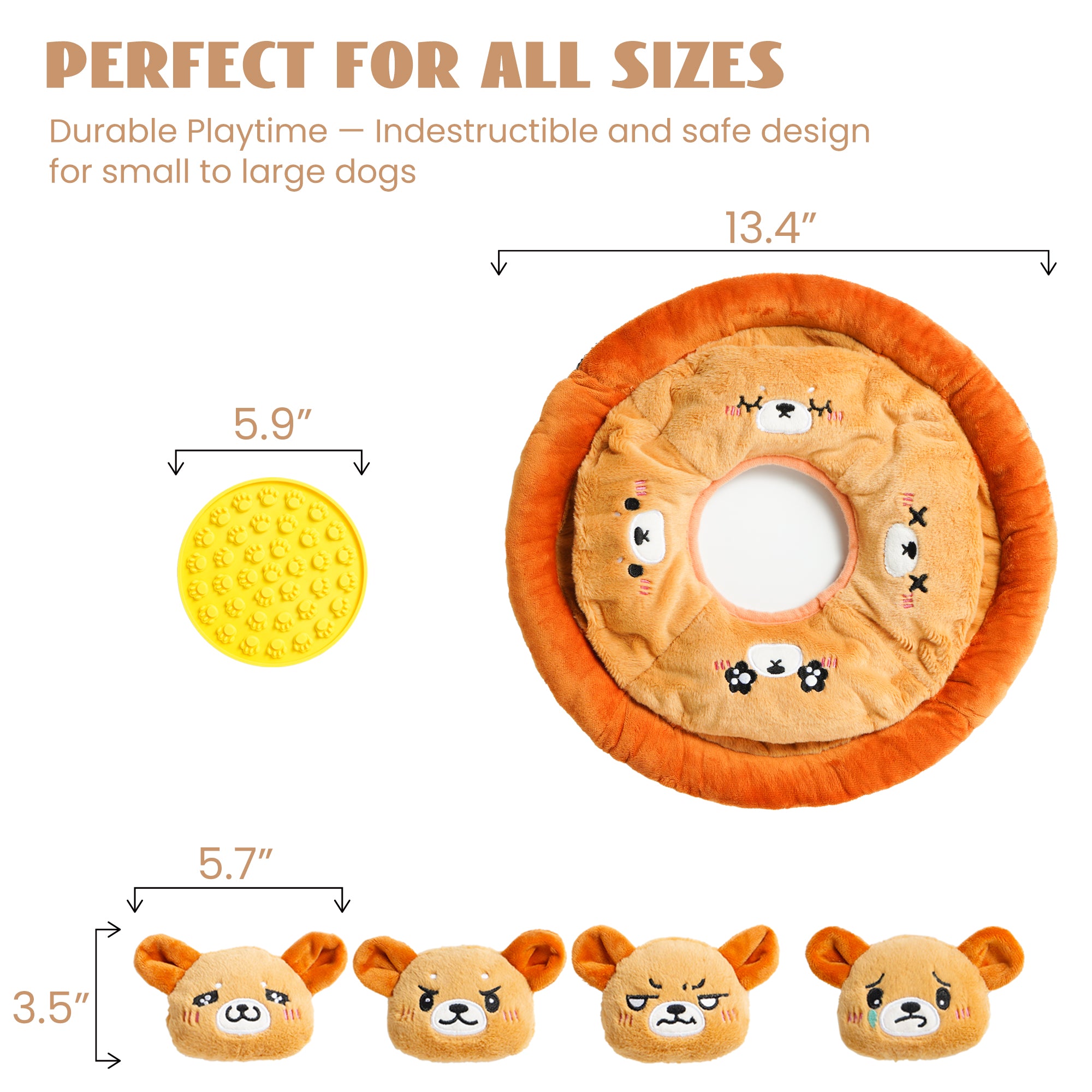
Quiet play should still be safe play. A small toy can be a swallowing risk, while an oversized or overly difficult toy may frustrate a dog. Our general size categories are small for dogs under 20 pounds, medium for dogs from 20 to 49 pounds, and large for dogs over 50 pounds. We suggest sizing up for a strong chewer or a dog with large jowls, then checking the measurements of the individual toy.
- Watch the first sessions. See whether your dog chews, carries, shakes, or tries to remove parts. That behavior tells you more than a product category alone.
- Inspect after vigorous play. Remove a toy with an open seam, exposed stuffing, a loose squeaker, or pieces your dog could swallow. Do not rely on a "tough" description as a reason to skip inspection.
- Choose activities that fit your floor. Avoid repeated throws that produce impacts or invite sprinting on slippery surfaces. A gentle roll or a stationary search is often easier to manage.
- Respect building quiet hours. Save squeakers and energetic games for times that suit your home and neighbors. A low-tone squeaker is still a sound source.
- Use food thoughtfully. If you are filling a search toy, you can use a portion of your dog's usual food rather than automatically adding extra snacks.
- Clean according to the toy's care instructions. Food-search toys in particular need attention if food is left inside. Let a cleaned toy dry before storing it.
When you want both variety and a deliberate mix of plush, chew, and interactive options, Nocciola Toys' ToyBox offers a monthly selection for different pet family profiles. Regardless of how toys arrive at your door, choose what to leave out based on your dog's behavior and your apartment's noise limits.
Frequently asked questions about apartment dog toys
What is the quietest kind of dog toy for an apartment?
A soft, stationary activity that encourages sniffing or gentle chewing is usually easier to keep quiet than fetch or a repeatedly squeaked toy. The quietest choice for your dog depends on what they do with it: a dog that flings a food puzzle across tile can make a supposedly quiet toy loud.
Are squeaky dog toys a bad idea in apartments?
No. They are better treated as planned, supervised play rather than an all-day default. Try the toy during daytime hours, listen for how often it squeaks during normal use, and put it away when you need a quieter activity. A low-tone squeaker may be preferable to a sharper sound, but it is not silent.
What can I do if my dog turns every toy into a noisy game?
Change the activity before buying another toy. Play on a secure rug, stop throwing toys indoors, and offer a search task that keeps your dog in one area. Watch whether excitement builds during tug or squeaky play, and switch to a calmer activity before the dog begins running or barking.
Can a plush toy be suitable for a strong chewer?
It can be worth considering a plush toy built for determined chewing, such as one with reinforced stitching, but supervision and inspection remain essential. Remove it if your dog opens seams or exposes stuffing or a squeaker. Choose the size according to the individual toy and your dog's mouth and chewing habits.
How do I keep an apartment dog engaged when I cannot play fetch?
Offer different kinds of work: a food search, an easy puzzle, a controlled tug session with you, and a soft toy your dog enjoys carrying or mouthing. Start with the activity your dog already likes, then vary the challenge or rotate the toys. Interest does not require a large room or a loud toy.
Should I leave an enrichment toy out when my dog is home alone?
First watch how your dog uses it while you are present. If they tear material, remove components, or become frustrated and bang it against the floor, do not leave that toy available unsupervised. A dog's safe play habits matter more than whether a product is called an enrichment toy.
Will a rug make indoor play quiet enough for downstairs neighbors?
A rug can soften some toy and paw impacts and improve footing, but it cannot eliminate all sound. Listen from different parts of your home, especially near shared walls, and avoid games that involve repeated jumping or hard landings.
Make engagement fit the home you share
The best apartment toy is not the one that produces the least sound in isolation. It is the one your dog can use safely and willingly, in a way that fits your flooring, neighbors, and daily routine. Begin with a contained sniffing activity, add a size-appropriate soft or chew toy, and reserve louder interactive play for a suitable place and time. Then pay attention to what your dog actually does.
We make textured, interactive dog toys like the Durable Duck for play that has personality as well as purpose. Choose the activity as carefully as the toy, and your dog can stay engaged without making every neighbor part of the game.